
Treatment
How Red Light Therapy Actually Works
At a glance
Red light therapy, also called photobiomodulation, uses specific wavelengths of red and near-infrared light believed to reach mitochondria inside cells and support energy production. Research describes this as an active, ongoing area of study rather than settled fact. A whole body bed differs from a handheld panel mainly in coverage: one session treats the entire body rather than a single joint. Results vary, and no clinic should promise certainty about outcomes.
Red light therapy gets marketed under a lot of confident language, and most of it skips past the actual mechanism entirely. The real name for it is photobiomodulation, and the honest explanation of how it works is more interesting, and more limited, than most of that marketing suggests.
We would rather walk through the actual science than lean on the marketing shorthand, partly because the real mechanism is genuinely interesting on its own, and partly because understanding it is what lets you judge for yourself whether a session is worth your time, rather than taking a clinic’s word for it.
What the light is actually doing
Photobiomodulation uses specific wavelengths of red and near-infrared light, chosen because they penetrate skin deeply enough to reach structures below the surface without heating or damaging tissue the way ultraviolet light does. The proposed target inside cells is the mitochondria, the structures responsible for producing cellular energy.
A peer-reviewed look at how red and near-infrared light interact with mitochondria describes light in this range being absorbed by an enzyme inside the mitochondria, which is thought to influence the cell’s energy output. That is a specific, testable mechanism, not a vague claim about “activating healing.” It is also still being actively studied, which is a different thing than being settled.
Why mitochondria are the target
The enzyme in question, cytochrome c oxidase, sits inside the mitochondrial membrane and is central to how cells convert oxygen and nutrients into usable energy. Research tracing light’s effect to the enzyme that helps cells produce energy describes red and near-infrared wavelengths being absorbed by this enzyme in a way that appears to shift its activity, with downstream effects researchers connect to circulation and cellular signaling in the treated area.
This is the piece worth sitting with: the mechanism is at the level of a single enzyme inside a cell, not a whole-body switch that gets flipped on. What that adds up to for a given person’s soreness, recovery or comfort is the part that varies, and where “results vary” stops being a disclaimer and starts being simply accurate.
The mechanism is real and it is specific. What it adds up to for any one person is the part that still varies, and no one should promise you otherwise.
Why a whole body bed is different from a small panel
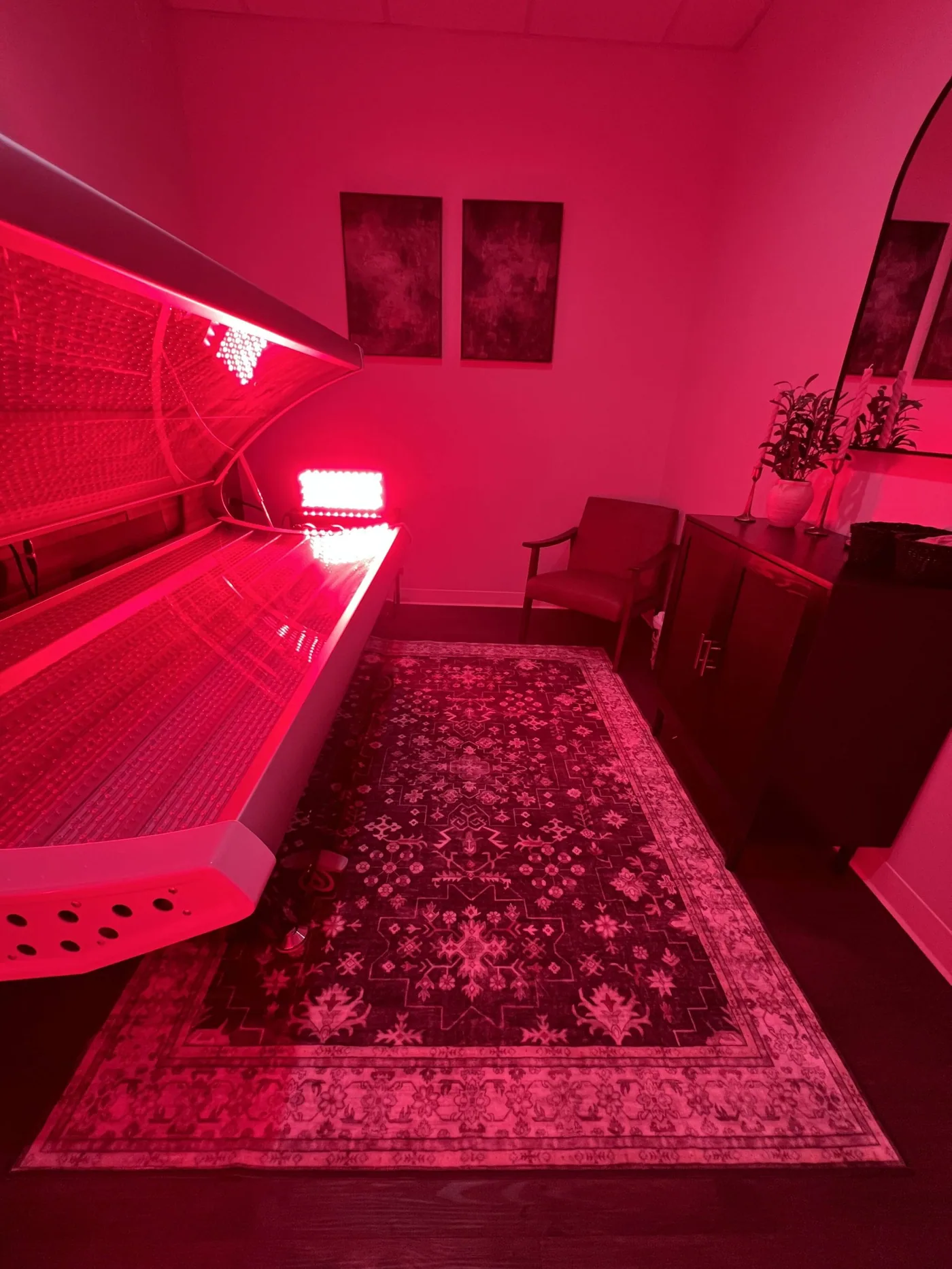
Photobiomodulation itself does not change based on the size of the device delivering it. What changes is coverage. A handheld panel delivers the same wavelengths to one area at a time, which suits someone with a single, localized concern. A whole body bed, like the TrifectaLight PRO 450 used for sessions here, surrounds the entire body at once, which matters more for someone dealing with soreness or stiffness across several areas rather than one joint.
A review of photobiomodulation’s use across different medical specialties notes that the same underlying mechanism has been studied across a wide range of applications, from wound care to musculoskeletal recovery, which is part of why a single whole-body session can plausibly support more than one goal at once, even though the strength of evidence differs by application.
Who a session is not the right fit for
The mechanism involves light penetrating tissue rather than something purely surface-level, so not everyone is a candidate without a closer look first. Pregnancy without clearance from an obstetric provider, a medication that increases sensitivity to light, an active skin cancer or an undiagnosed lesion in the area, and certain eye conditions or photosensitive epilepsy are all reasons a session would need medical clearance first, or would not be appropriate at all. That is why a quick health screen happens before a first session, not as a formality but as a genuine check.
What this means in practice
None of this makes red light therapy a cure-all, and it should not be presented as one. What it does mean is that a passive, short, non-invasive session is doing something specific and studied at the cellular level, not nothing. Whether it is worth adding to your care depends on what you are trying to accomplish, which is also why it sits inside a broader set of rehabilitation and recovery services here rather than being sold as a standalone fix.
Questions we get asked
What is photobiomodulation, in plain language?
It is the scientific name for what most people call red light therapy: using specific wavelengths of red and near-infrared light on the body, believed to influence cellular activity rather than heat or burn tissue. It is a genuinely active area of research, and the mechanisms are still being refined, not fully settled.
Does red light therapy actually increase energy production in cells?
Research points to light affecting an enzyme involved in how mitochondria produce cellular energy, but this is described as a proposed and studied mechanism, not a proven guarantee of a specific outcome for every person. What patients notice varies, and we do not promise a particular result before you try it.
Is a whole body bed just a bigger version of a handheld panel?
Functionally, the main difference is coverage rather than a different mechanism. A handheld panel treats one area at a time, while a whole body bed like the one here treats the entire body in a single short session. Which makes more sense depends on whether your goal is localized or broader.
How is red light therapy different from a heat lamp?
A heat lamp works by warming tissue directly. Red light therapy uses specific wavelengths chosen for their proposed effect on cells rather than for warmth, and a session should feel comfortably warm rather than hot. The two are not interchangeable even though both involve light.
Is red light therapy backed by strong scientific consensus?
The mechanisms are supported by a genuine and growing body of research, but it is fair to call this an evolving field rather than one with settled consensus on every claimed benefit. We would rather describe it accurately than oversell it, and results vary from person to person.