
Conditions we treat
Sciatica Treatment in St. Augustine
Sciatica is not a diagnosis on its own. It is the name for pain travelling along the sciatic nerve, down the buttock and into the leg, and it is a symptom of something compressing or irritating that nerve. In most cases the culprit is a disc in the low back. Finding which one, and why, is what decides whether adjusting, decompression or something else is the right treatment.
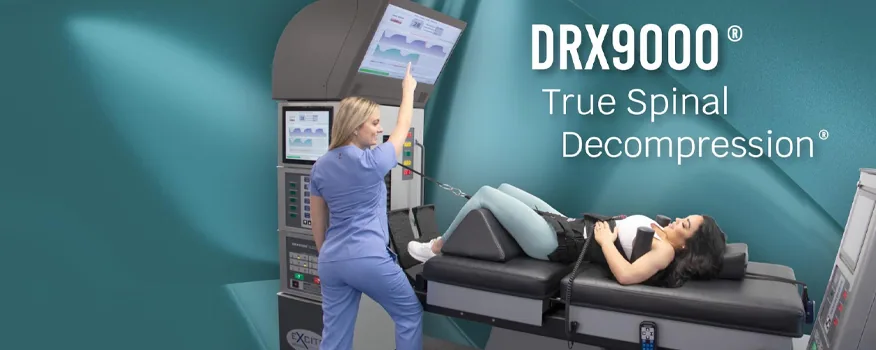
- DRX9000 decompression on site
- Digital X-ray in the building
- Exam before any treatment
Understanding sciatica
Sciatica is pain that follows the path of the sciatic nerve from the low back through the buttock and down the back of the leg, sometimes to the foot. It is caused by compression or irritation of the nerve root, most commonly by a herniated or bulging disc, and less often by spinal stenosis, spondylolisthesis or the piriformis muscle.
Sciatica is one of those words that gets used as if it were a diagnosis. It is not. It is a description of where the pain travels, and on its own it tells you almost nothing about what to do next.
That distinction is the whole reason this page exists. Two people can walk in describing exactly the same line of pain from the buttock down the back of the leg, and have completely different problems: one has a disc pressing on a nerve root at L5, the other has a piriformis muscle in spasm and a perfectly healthy spine. Treating them the same way helps one and irritates the other.
The sciatic nerve is the largest nerve in the body. It leaves the spine as several nerve roots in the low back, joins into one trunk through the pelvis, and runs down the back of the leg. Anything that presses on or irritates it anywhere along that path can produce the same travelling pain, which is why the pain being in your calf tells you very little about where the problem is. the MedlinePlus entry on sciatica is a reliable plain-language overview if you want the background before your visit.
Why sitting is usually the worst of it
Most people with disc-driven sciatica report that sitting is the thing they cannot tolerate, and that standing or walking eases it. There is a mechanical reason for that: sitting increases pressure inside the lumbar discs considerably compared with standing, so a disc that is already pressing on a nerve presses harder.
It is a useful clue on examination, and it is also the single most actionable piece of advice we give people in their first week. If a desk is where your day happens, the desk is part of the problem.
Symptoms people describe
- Pain running from the low back or buttock down the back of one leg
- Sharp, burning or electric pain rather than a dull ache
- Numbness or pins and needles in the leg, calf or foot
- Weakness in the leg, or a foot that catches when you walk
- Pain that worsens when sitting, and eases when you stand or walk
- Pain that spikes when you cough, sneeze or strain
- Symptoms on one side only, which is the usual pattern
- A leg that feels heavy or unreliable on stairs
You do not need all of these. If two or three sound like your week, that is enough to be worth examining.
What causes it
A herniated or bulging disc
The most common cause by a distance. The outer wall of a disc weakens, its inner material pushes outward, and it presses on the nerve root leaving the spine at that level. This is the situation non-surgical decompression exists for, because reducing pressure inside the disc reduces pressure on the nerve.
Degenerative disc disease
Discs lose height and hydration over time. As the space between two vertebrae narrows, the opening the nerve root travels through narrows with it, and a nerve that had adequate room stops having it.
Spinal stenosis
A narrowing of the spinal canal itself, usually from arthritic change. Classically the pain eases when you lean forward onto a shopping cart and returns when you stand upright, which is a useful clue on examination.
Spondylolisthesis
One vertebra slips forward on the one below it, which changes the shape of the space the nerve passes through. It also changes which treatments are appropriate, which is why imaging matters when the exam suggests it.
Piriformis involvement
The sciatic nerve runs beneath, and in some people through, the piriformis muscle deep in the buttock. When that muscle is tight or in spasm it can irritate the nerve directly, producing sciatic pain with no disc involvement at all.
How we treat sciatica in St. Augustine
We treat sciatica by identifying what is compressing the nerve and then unloading it. That usually means chiropractic adjustments to restore motion where it has been lost, non-surgical decompression on the DRX9000 when the disc is the driver, and corrective rehabilitation so the nerve stops getting compressed again once the pain settles.
Non-Surgical Spinal Decompression
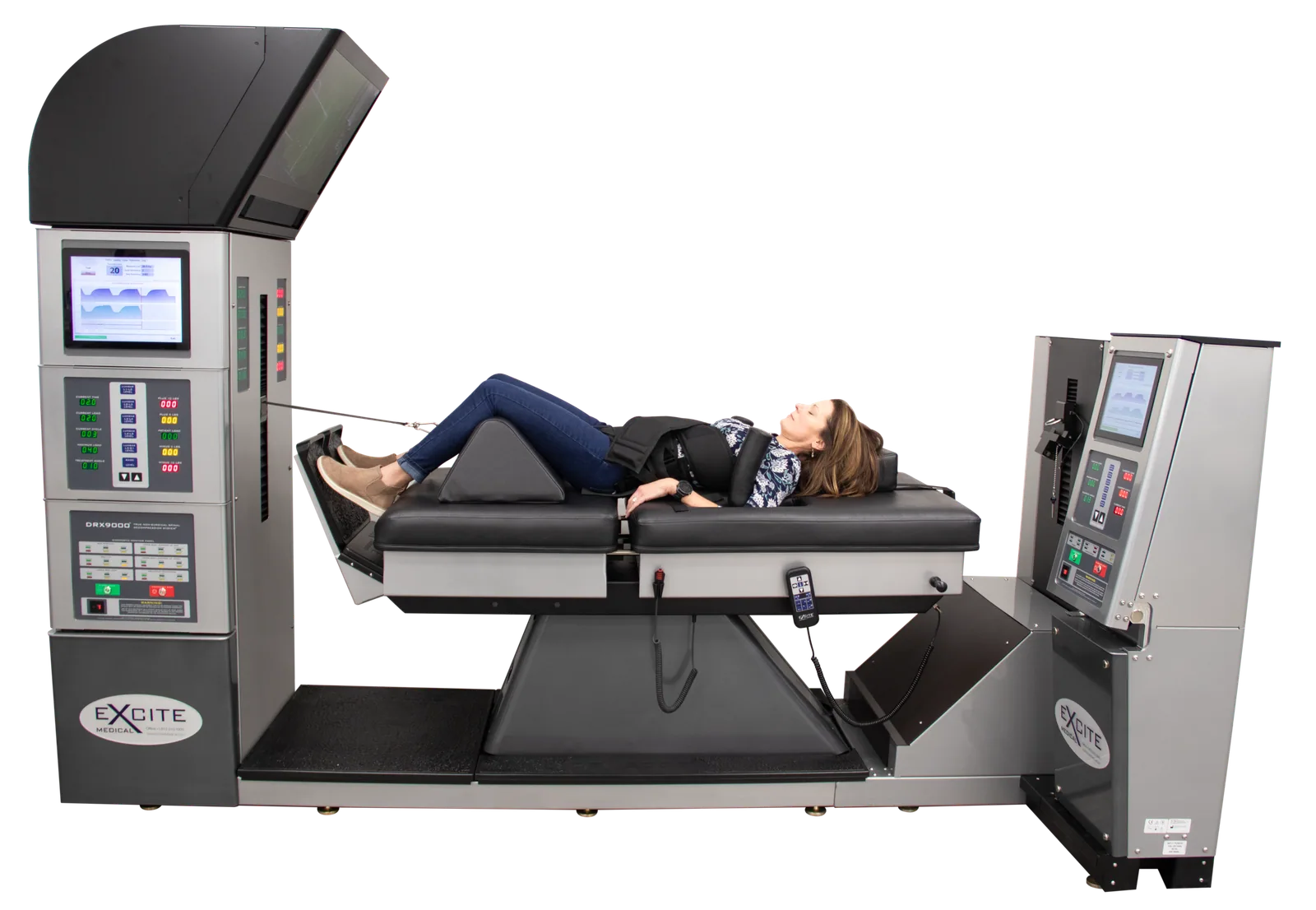
The DRX9000 separates the vertebrae in a controlled cycle, lowering pressure inside the disc so it stops pressing on the nerve root. This is the treatment when the exam and imaging point at a disc.
Read about non-surgical spinal decompressionChiropractic Adjustments
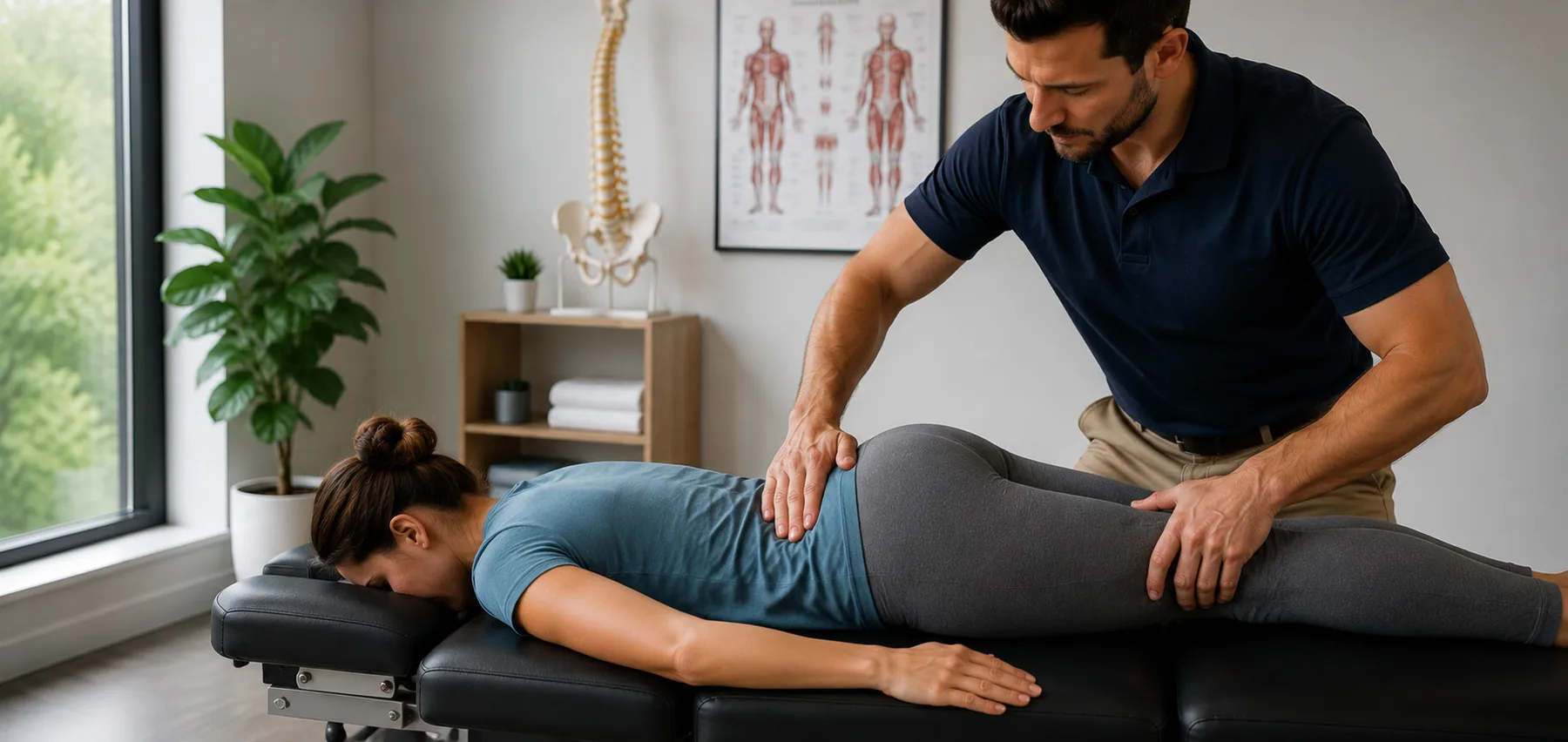
Restoring motion at the segments that have stopped moving, so the level driving your symptoms stops absorbing the load of the ones either side of it.
Read about chiropractic adjustmentsSoft Tissue Treatments
Myofascial and trigger point work through the glutes and piriformis, which is the treatment when the muscle rather than the disc is irritating the nerve.
Read about soft tissue treatmentsCustomized Rehab
Corrective work through the hips and trunk so the low back stops taking load it was never meant to carry. This is the part that keeps sciatica from returning.
Read about customized rehabYour options, including the ones we do not offer
| Option | Best for | Worth knowing |
|---|---|---|
| Conservative chiropractic care | Most sciatica, especially in the first weeks | Adjusting, soft tissue work and rehabilitation. The recommended starting point for the large majority. |
| Non-surgical decompression | Disc-driven sciatica that has not settled with hands-on care | Adds the DRX9000 to the plan. A course of sessions rather than one visit. |
| Epidural steroid injection | Severe radiating pain needing short-term control to allow rehabilitation | We do not perform these. It is managed by a medical provider, and we will refer when it is the sensible next step. |
| Surgery, such as a microdiscectomy | Progressive neurological deficit, or genuine failure of conservative care | We do not perform surgery. It has a real place, and we will tell you when we think you have reached it. |
Recovery and how long it takes
Most sciatica improves with conservative care, and many people notice a change in the first few visits. The honest range is wider: a recent disc irritation often settles over a handful of weeks, while sciatica built over years with real degenerative change needs a course of decompression alongside rehabilitation, measured in months. You get a plan, a session count and a cost at the findings review, and if you are not tracking against it we will say so rather than keep selling visits.
Results vary. Any timeline is an expectation built from your exam, not a promise.
When it needs more than us
Book with a medical provider, or go to an emergency department, if you have any of these:
- Numbness in the groin or inner thighs, sometimes described as saddle numbness
- Loss of bladder or bowel control, or difficulty starting to urinate
- Weakness in both legs, or weakness that is getting worse day by day
- Sciatic pain after significant trauma, such as a fall or a car crash
- Fever, unexplained weight loss, or a history of cancer alongside new back pain
Patients with this problem
5.0 from 166 Google reviewsLast summer my back was in terrible shape after a day riding on a jet ski. I went to Dr. Derek and he provided some immediate relief but also introduced some critical stretch and strength techniques to help with injury prevention. 8 Months later I continue to visit once a month as continued preventative maintenance.
Who you would be seeing
Dr. Derek Sisak examines and reads the imaging, Nate Reinhardt runs the decompression sessions, and Amy Vanover works the rehabilitation side. Sciatica needs all three, and having them in one building means the plan changes as the findings change rather than waiting on someone else's schedule.
Care for this runs through our conditions we treat, so if the exam points somewhere other than where you expected, the right treatment is already in the building.
Book the $47 evaluationWhere to find us
The clinic sits at 276 Paseo Reyes Dr in St. Augustine, Florida, just off U.S. 1 at World Golf Parkway, near the entrance to the Palencia neighborhood. Most people coming in for sciatic and radiating leg pain drive in from across St. Johns County, and the office is a straight run up or down U.S. 1 from either end of it.
- Palencia
- World Golf Village
- Nocatee
- Ponte Vedra
- Julington Creek
- Downtown St. Augustine
Questions we get asked
How long does sciatica take to go away?
It depends on what is compressing the nerve. A recent disc irritation often settles over several weeks with conservative care. Long-standing degenerative change, or a substantial herniation, usually needs a longer plan including decompression. Many people feel a change in the first few visits, which is common enough to expect but not something we will promise.
Should I rest or keep moving with sciatica?
Keep moving, within limits. Extended bed rest tends to make sciatica worse, because the tissue stiffens and the supporting muscles switch off. Gentle walking is usually tolerated well. Avoid prolonged sitting, which loads the discs most, and heavy lifting until the nerve has calmed down.
Is sciatica a slipped disc?
Often, but not always. A disc problem is the most common cause, and discs do not actually slip, they bulge or herniate. But sciatica can also come from spinal stenosis, from a vertebra that has shifted forward, or from the piriformis muscle irritating the nerve in the buttock. Those are treated differently, which is the reason the exam comes before the plan.
Can a chiropractor make sciatica worse?
Adjusting a low back without knowing what is compressing the nerve can irritate it, which is why nothing here happens before an exam and, where warranted, imaging. There are also situations where adjusting is not appropriate at all, including progressive neurological loss. If you are in one of those groups we refer you rather than treat you.
Does spinal decompression work for sciatica?
When the sciatica is disc-driven, decompression is aimed directly at the mechanism: it lowers pressure inside the disc so it stops pressing on the nerve root. It is not the right tool when the pain is coming from the piriformis muscle or from stenosis, and it is not appropriate during pregnancy or with fusion hardware. The screening exists to sort that out first.
Will I need an MRI?
Not usually to begin. Digital X-ray is on site and answers most of what a conservative plan needs. An MRI earns its cost when there is a neurological finding, when the plan is not working as expected, or when a surgical opinion is on the table.
Request your appointment
Start with an exam,
not a guess.
Reading on this, from us
Written by the doctors here, on the same treatment this page describes.