
Rehabilitation
Customized Rehab in St. Augustine
Customized rehab is the corrective exercise program built from your exam findings and run alongside your hands-on care. It retrains the muscles holding an old pattern in place, so the motion an adjustment restores is still there next week. At Spinal Solutions it is designed around what you will realistically do, not an ideal week that never happens.
- Built from your own exam findings
- Amy Vanover on the rehab side
- Programs kept short enough to actually do
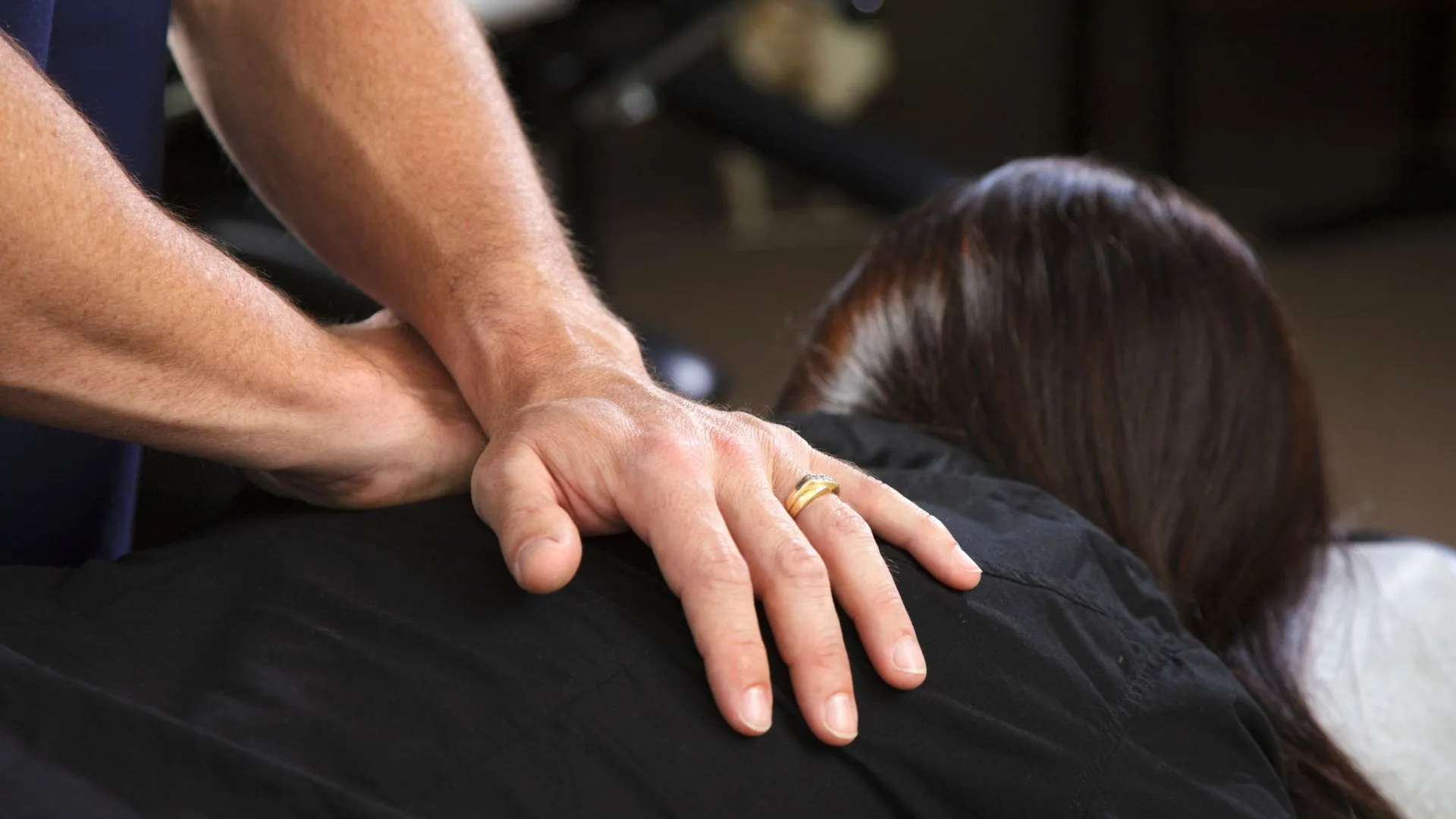
The part that decides whether it lasts
The human body is dynamic. Like all dynamic objects, it tends to break down over time. Just like our cars need their tires rotated, our joints need to move efficiently.
An adjustment restores motion to a joint that lost it. That is a real change, and it is usually felt immediately. What it does not do is change the reason the joint lost its motion in the first place. If a muscle has been overworking for two years to compensate for one that switched off, it is still going to be overworking on the drive home.
That gap is what rehabilitation fills. It is not an upsell attached to the end of a visit, it is the half of the treatment that decides whether you are back in three weeks. The federal the federal Physical Activity Guidelines for Americans sets out how little movement it actually takes to change how a body tolerates load, and the number surprises most people.
Built from findings, not from a template
The most common failure in corrective exercise is a generic program. Fifteen movements that are good for backs in general, handed to someone whose specific problem is one hip that will not extend.
So the program here starts from the exam. Which segment is doing too much, which has stopped contributing, and what pattern is your day rebuilding. Three or four targeted movements aimed at that answer will do more than a comprehensive routine aimed at nobody in particular.
It also means the program changes. Exercises that have done their job get retired rather than accumulating, and if the findings shift, so does the work.
Short enough to actually happen
The other reason programs fail is length. A plan that needs forty minutes is a plan that survives until the first genuinely busy week.
We would rather give you four movements you do most days than fifteen you abandon by Wednesday, and that is a clinical decision rather than a convenience. Adherence is the variable that changes outcomes most, and it is the one most easily designed for.
Everything gets coached in the office before it becomes homework, because an exercise performed in the wrong pattern reinforces exactly the problem it was prescribed to fix.
Conditions we treat with this

How it compares to the alternatives
| Option | Best for | Worth knowing |
|---|---|---|
| Corrective rehab inside a chiropractic plan | A pattern that keeps re-creating the same restriction | Targeted at your own findings, and adjusted as those findings change. |
| Hands-on care alone | A one-off injury with no underlying pattern driving it | Faster and cheaper when it fits. It is the wrong choice for anything recurring. |
| A generic exercise program | General fitness and staying active | Good for you, and untargeted. It will not find the specific weak link the exam identified. |
| Doing nothing between visits | Nobody, honestly | The most common reason a plan stalls. The tissue reverts to whatever it is loaded to do. |
Who this helps, and who it does not
Usually a good fit
- The same problem has come back three or four times
- You feel good leaving the office and stiff again within days
- Desk work or repetitive loading keeps rebuilding the pattern
- Returning to sport, work or driving after an injury
Not the right treatment
- An acute injury still in its early inflammatory phase, which needs settling first
- Undiagnosed pain that has not been examined yet
- Progressive neurological loss, which needs a medical opinion before loading anything
- No intention of doing anything between visits, in which case the plan should be a different one
If this is you, we will say so and point you somewhere better.
What to expect
- 01 Find the weak link
Movement testing to see which segment is doing too much work and which has stopped contributing. That is the difference between a targeted program and a generic one.
- 02 Three or four things, not fifteen
A short program you will actually do beats a comprehensive one you will not. We would rather have four exercises done daily than fifteen abandoned by Wednesday.
- 03 Learn it here first
Every movement is coached in the office before it becomes homework, because an exercise done in the wrong pattern reinforces the problem it was meant to fix.
- 04 Progress or change it
The program is reviewed as the findings change. Exercises that have done their job get retired rather than accumulating.
What it costs and how payment works
Rehabilitation is part of a care plan rather than a separate purchase, so its cost is inside the plan quoted at your findings review. Everyone starts with the $47 new-patient evaluation, covering the consultation, orthopedic and neurological testing, digital imaging where clinically necessary, the findings review, and a trial shockwave or red light therapy session where it is appropriate itself. Medicare Part B covers manual spinal manipulation to correct a subluxation and does not cover therapies of this kind, so the rehabilitation portion is typically covered by an in-house care plan, a wellness plan, or CareCredit financing. PIP and personal injury cases are handled directly.
Why have it done here
Dr. Sisak carries a Chiropractic Rehabilitation certification from the Midwestern Rehabilitation Institute, and this is the side of the practice that certification was for. The program is built from your own exam rather than pulled from a template, and it is kept short on purpose, because a plan nobody does is not a plan.
This sits inside our rehabilitation program, so if it turns out not to be what you need, the alternative is in the same building.
Book the $47 evaluationWhat patients say
5.0 from 166 Google reviewsLast summer my back was in terrible shape after a day riding on a jet ski. I went to Dr. Derek and he provided some immediate relief but also introduced some critical stretch and strength techniques to help with injury prevention. 8 Months later I continue to visit once a month as continued preventative maintenance.
Where to find us
The clinic sits at 276 Paseo Reyes Dr in St. Augustine, Florida, just off U.S. 1 at World Golf Parkway, near the entrance to the Palencia neighborhood. Most people coming in for corrective exercise and recovery drive in from across St. Johns County, and the office is a straight run up or down U.S. 1 from either end of it.
- Palencia
- World Golf Village
- Nocatee
- Ponte Vedra
- Julington Creek
- Downtown St. Augustine
Questions we get asked
Is this the same as physical therapy?
It is corrective exercise and rehabilitation delivered inside a chiropractic care plan, by a chiropractic practice. Dr. Sisak holds a certification in Chiropractic Rehabilitation from the Midwestern Rehabilitation Institute. If what you need is a course of licensed physical therapy, that is a different profession and we will refer you rather than blur the line.
How much time will it take each day?
Usually less than most people expect. The programs here are kept deliberately short, because adherence beats ambition. A handful of movements done most days will outperform a long circuit done twice and dropped.
Why do I need exercises if the adjustment already helped?
Because the adjustment changes what a joint can do, and the muscles around it decide what it does do. If nothing retrains that, the tissue pulls the joint back toward the pattern it knows, which is why a good week is followed by a familiar Monday.
Who actually runs the rehab side?
Amy Vanover works alongside the doctors on the rehabilitation side of care. The program is built from the doctor's findings, and she is the person you will most often be working through it with.
How long until I can stop?
Until the pattern holds without it, which depends on how long it took to build. Some people move into a short maintenance routine, others keep a couple of movements permanently because their work rebuilds the problem every day. That is a conversation, not a fixed date.
Can I do this at home without equipment?
Mostly, yes. The majority of what gets prescribed needs a floor and a wall. Where a band or a light weight helps, we will tell you exactly what to get rather than pointing you at a shop.
Request your appointment