
Conditions we treat
Posture Correction in St. Augustine
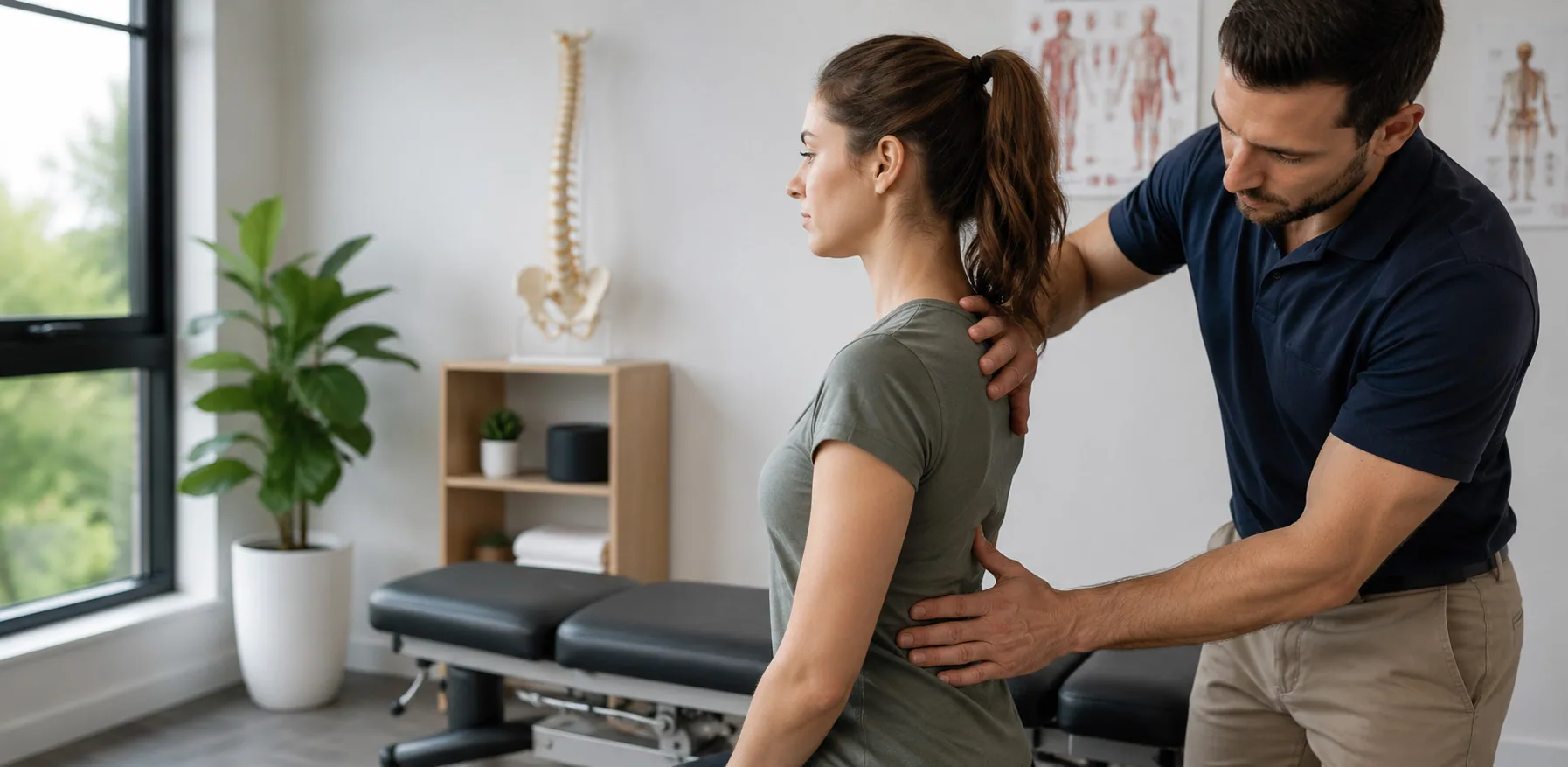
Correcting poor posture is more than an aesthetic issue. Poor posture, especially from long hours at a desk, is one of the most common and most preventable contributors to everyday aches and pains. Fixing it takes three things together: restoring motion where the joints have stiffened, releasing and strengthening the muscles holding the pattern, and changing the setup that built it.
- Corrective exercise, not just adjusting
- Ergonomic plan you can actually follow
- Gradual, lasting change over quick fixes
Understanding posture correction
Poor posture is a sustained pattern where the head sits forward, the shoulders round and the upper back curves, usually because weak or tight muscles, past injury or a daily setup have made that position the path of least resistance. It matters because it places continuous extra load on ligaments, joints and muscles that were not designed to carry it.
Correcting poor posture is more than just an aesthetic issue. Poor posture is also one of the most common contributors to the aches and pains we see in our St. Augustine chiropractic office. Back pain affects the vast majority of adults at some point in their lives, and poor posture, especially from long hours at a desk, is one of the most preventable contributing factors.
Whether you are dealing with musculoskeletal aches and pains, or you simply want to build better posture for a healthier body, this is a problem with a clear route through it. the MedlinePlus guide to good posture covers what good posture actually is when sitting, standing and lifting, which is a more useful starting point than most of what gets posted about it.
What better posture buys you
Besides the fact that you will look and feel more confident, good posture also offers proper spinal alignment, less pressure and stress placed on the ligaments, a reduced risk of injuries, less wear and tear on muscles and joints, better digestion and an improved mood.
If your shoulders are hunched or your back is rounded forward, those are telltale signs of poor posture, and they are also the things most people notice in a photograph long before they notice the pain.
Why it takes three things, not one
The most common reason posture work fails is that only one part of it gets done.
Adjustments restore motion to joints that have stiffened in the adapted position. Muscle-release techniques address the tight side of the pattern, because a shortened chest and hip flexor will pull you back into the position you just left. And strengthening rebuilds the mid-back, glutes and deep neck muscles that stopped contributing, which is the part that actually holds the new position without you thinking about it.
Having patients perform strengthening and stretching exercises regularly is what rebuilds and retrains those muscles, reducing the tension and tightness that contribute to poor posture. Do the adjusting without the exercise and you get a good week. Do the exercise without the release and you are strengthening against a brake.
The setup matters as much as the treatment
Chiropractic treatment can offer solutions and ergonomic strategies, and the second half of that sentence is where the durability comes from.
A workstation that puts your head forward for eight hours will rebuild the pattern faster than any program can undo it. So the plan you leave with includes the monitor, the chair, the phone and the frequency you get up, and none of it is optional if you want the correction to survive contact with a normal week.
Symptoms people describe
- Shoulders that sit rounded forward, or a visibly rounded upper back
- The head sitting forward of the shoulders rather than over them
- Aching between the shoulder blades by the end of the day
- Neck stiffness and headaches building through the working week
- Low back fatigue after standing or sitting for long periods
- Tightness across the chest and the front of the shoulders
- Feeling that standing up straight takes conscious effort
- Uneven wear on the soles of your shoes
You do not need all of these. If two or three sound like your week, that is enough to be worth examining.
What causes it
Weak or tight muscles
Usually both at once. The chest and hip flexors shorten while the mid-back and glutes weaken, and the body settles into whichever position needs the least work to hold. That is the pattern, and it is why stretching alone rarely fixes it.
Sustained desk and screen positions
Long hours at a desk are the single most preventable contributor we see. The load is small, but it is applied for most of the waking day, and tissue adapts to what it is asked to do most often.
Past injuries
An old injury that was guarded around often leaves a movement pattern behind long after the tissue healed. The body keeps protecting something that no longer needs protecting.
Pregnancy and weight change
Both shift the centre of gravity and change what the spine has to balance. Postural change through pregnancy is normal adaptation, and it often needs support afterwards rather than during.
Footwear and the ground up
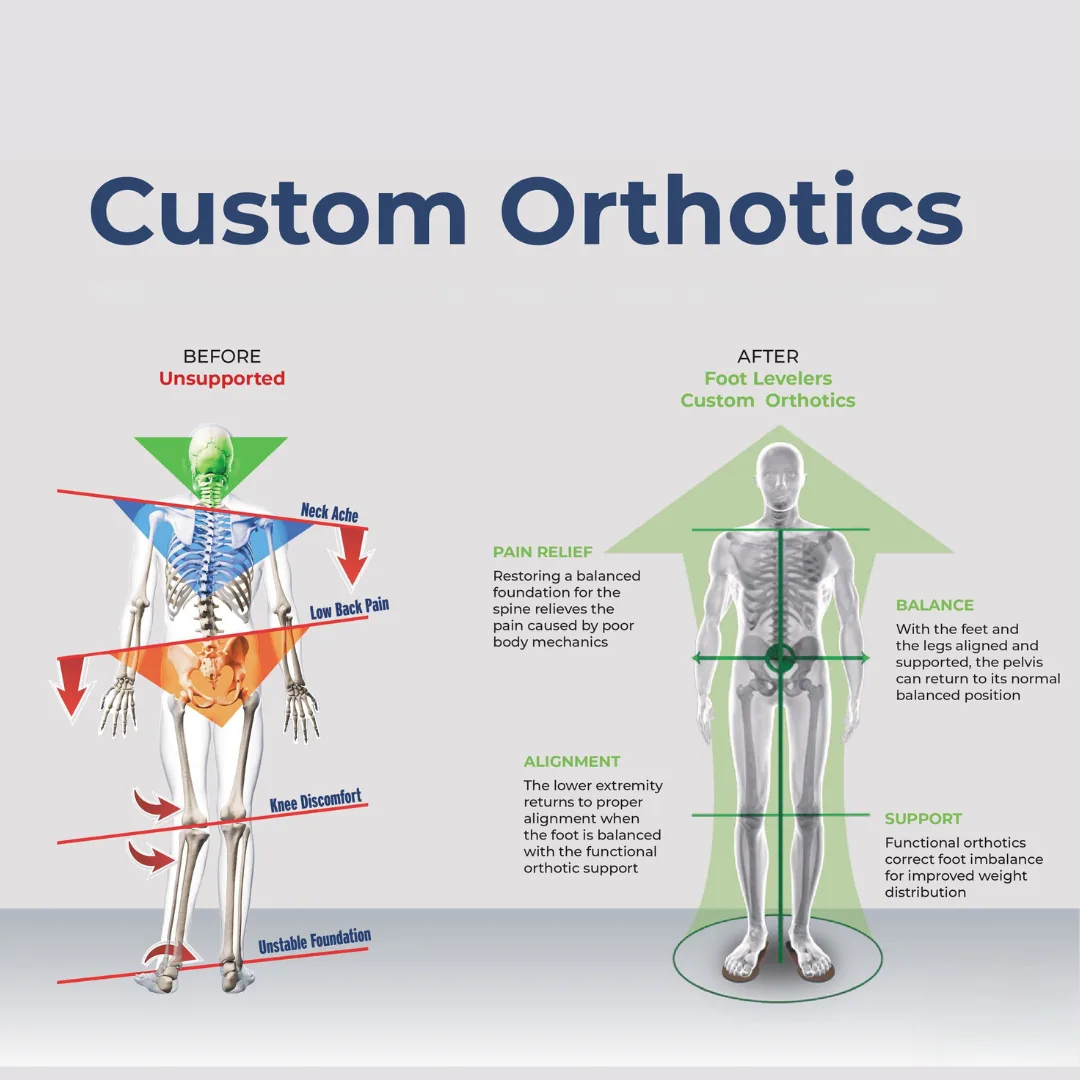
Even the shoes you wear affect posture over time. When an arch collapses, the leg rotates inward and the pelvis tips, and the spine above it compensates for the difference.
How we treat posture correction in St. Augustine
We correct posture with spinal adjustments to realign vertebrae and joints and ease pressure on the surrounding ligaments and nerves, muscle-release techniques for the tight side and strengthening for the weak side, and rehabilitation exercises performed regularly enough to retrain the pattern rather than briefly interrupt it.
Chiropractic Adjustments
Gentle, targeted pressure applied to areas of the spine to help realign vertebrae and joints, easing pressure on the surrounding ligaments, joints and nerves.
Read about chiropractic adjustmentsSoft Tissue Treatments
Muscle-release techniques for the tight side of the pattern, so the strengthening work has somewhere to move into.
Read about soft tissue treatmentsCustomized Rehab
Strengthening and stretching performed regularly to rebuild and retrain the muscles, reducing the tension and tightness that hold poor posture in place.
Read about customized rehabCustom Orthotics
Foot Levelers orthotics when the foundation is part of the problem, because a correction that ignores the ground does not hold.
Read about custom orthoticsRecovery and how long it takes
This depends on how long the poor posture has been present and what is causing it. Some patients notice improvement within a few weeks of consistent care, while more significant postural issues take longer. Chiropractic care cannot change habits overnight, and most patients see gradual, lasting improvement rather than an instant fix. Dr. Sisak will outline a personalized timeline after your first evaluation.
Results vary. Any timeline is an expectation built from your exam, not a promise.

Patients with this problem
5.0 from 166 Google reviewsThe entire team at Spinal Solutions has been great from start to finish. Knowledgeable, friendly and effective, my neck and back issues have never been kept at bay the way they have since I have been in Dr. Derek’s care. 10/10 recommend!
Who you would be seeing
Once we have examined your posture and asked about your health and lifestyle, we have a clearer picture of what is going on and how best to correct it. The three parts that make posture work, adjusting, muscle release and the rehabilitation that retrains it, all happen in the same building on the same plan, which is the reason a correction here tends to outlast the visit.
Care for this runs through our conditions we treat, so if the exam points somewhere other than where you expected, the right treatment is already in the building.
Book the $47 evaluationWhere to find us
The clinic sits at 276 Paseo Reyes Dr in St. Augustine, Florida, just off U.S. 1 at World Golf Parkway, near the entrance to the Palencia neighborhood. Most people coming in for posture-related pain drive in from across St. Johns County, and the office is a straight run up or down U.S. 1 from either end of it.
- Palencia
- World Golf Village
- Nocatee
- Ponte Vedra
- Julington Creek
- Downtown St. Augustine
Questions we get asked
Can a chiropractor really fix bad posture?
Chiropractic care cannot change habits overnight, but regular adjustments combined with targeted exercises can retrain the muscles and joints that hold poor posture in place. Most patients see gradual, lasting improvement rather than an instant fix.
How long does it take to correct posture with chiropractic treatment?
This depends on how long the poor posture has been present and what is causing it. Some patients notice improvement within a few weeks of consistent care, while more significant postural issues may take longer. Dr. Sisak will outline a personalized timeline after your first evaluation.
Is bad posture actually causing my pain?
Often it is a contributor rather than the sole cause. Poor posture places continuous extra load on ligaments, joints and muscles, and tissue under constant low load complains eventually. The examination is what separates a genuine postural driver from pain that would be there regardless.
Do posture braces work?
A brace holds you in a position; it does not teach a muscle to hold you there. Used briefly as a reminder, some people find them useful. Relied on, they tend to let the muscles that should be doing the work do even less. We would rather build the strength that makes the brace unnecessary.
What can I change at my desk today?
Get the top of the monitor to roughly eye level, bring the keyboard close enough that your elbows stay by your sides, and get up every half hour or so. That last one does more than the other two combined, because no posture is a good posture if you hold it for four hours.
Is it too late if I have had this posture for twenty years?
No, though the timeline is honest rather than encouraging. Long-standing postural change involves adapted tissue and, sometimes, arthritic change that will not reverse. What almost always improves is how you move, how much load the painful structures take, and how you feel at the end of a day.
Request your appointment