
Chiropractic Care
Prenatal Chiropractic Care in St. Augustine
Prenatal chiropractic care uses gentle, pregnancy-adapted technique and positioning to ease the discomfort that comes as the body carries a growing baby: low back and sciatic pain, round ligament pain, pubic symphysis discomfort and the neck and shoulder tension that follows a changing posture. Dr. Sisak adapts the approach to the stage of pregnancy rather than applying one method throughout.
- Pregnancy-adapted technique and positioning
- Care through pregnancy and postpartum
- Exam first, every time

What pregnancy asks of a spine
During pregnancy a woman’s body goes through significant changes in a relatively short amount of time. Carrying the added weight of a growing baby shifts spinal alignment and places new demands on the musculoskeletal system, and the body has to keep adapting as pregnancy progresses.
At our St. Augustine clinic we commonly see changes in posture and repetitive strain patterns in women during pregnancy and the postpartum period. As the center of gravity moves forward, the low back takes on more curve, the pelvis tilts, and the muscles that were quietly holding everything together start working in a different order. That is not damage. It is adaptation. But it is why discomfort tends to arrive in predictable places.
Without support, those changes can show up as pubic symphysis dysfunction or pain, round ligament pain, lower back and sciatic pain, neck and shoulder discomfort, and headaches. Back pain in pregnancy is common enough that the ACOG guidance on back pain during pregnancy covers what is typical, what helps, and the signs that mean you should call your obstetric provider rather than anyone else.
How the care is adapted
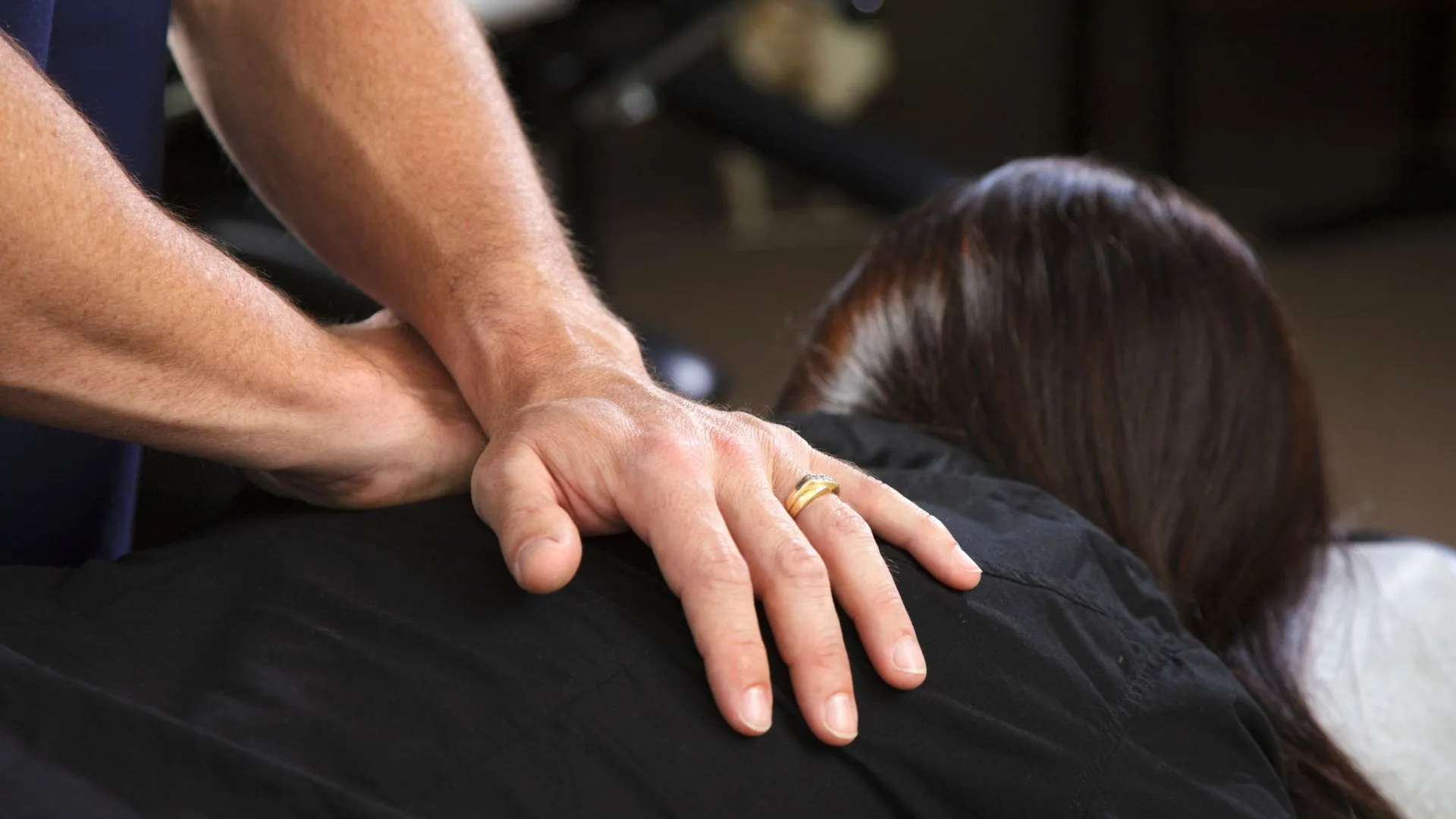
The technique is the part that changes most. Force is lower, contact is more specific, and positioning is set up so you are never asked to lie face down on your abdomen. Side-lying and supported positions do the work instead, and the setup happens before you get on the table rather than being improvised around you.
The other change is scope. Imaging is not used, so the exam and your history carry more of the assessment than they would otherwise. That makes the first visit longer, and it makes what you tell us about your stage and your obstetric care genuinely load-bearing rather than paperwork.
After the birth
Postpartum is the half people forget to plan for. The body has spent months adapting to a load that has now gone, while taking on a new set of demands: feeding positions, carrying on one hip, and very little sleep. Lingering back, neck or pelvic discomfort in that window is common, and it usually responds well because the tissue is already primed to change.
Our goal is to help support your body through every stage of pregnancy and recovery afterward, using gentle, pregnancy-safe techniques tailored to what your body needs at each stage.
Conditions we treat with this

Who this helps, and who it does not
Usually a good fit
- Low back or pelvic pain that arrived or worsened during pregnancy
- Round ligament pain, or discomfort at the front of the pelvis
- Sciatic pain traveling into the buttock or down a leg
- Postpartum back, neck or pelvic discomfort that is not settling on its own
Not the right treatment
- Vaginal bleeding, leaking fluid, or a sudden drop in fetal movement, which need your obstetric provider now
- Pre-eclampsia, placental abruption or placenta previa
- Severe or sudden abdominal pain, or regular contractions before term
- Any pregnancy your obstetric provider has asked you to restrict activity in, until they clear it
If this is you, we will say so and point you somewhere better.
What to expect
- 01 History and exam, adapted to pregnancy
We talk through your stage, your obstetric care, and where the discomfort actually is. Testing is chosen to avoid positions that are uncomfortable or inappropriate now.
- 02 Positioning that works
Support is used so you are never asked to lie face down on your abdomen. Side-lying and supported positions do the work instead.
- 03 Gentle, specific adjusting
Low-force technique aimed at the pelvis and the spinal levels the exam identified, with no pressure applied across the abdomen at any point.
- 04 What to do between visits
Positioning, sleep setup and a small amount of movement work that suits your stage. It is deliberately simple, because late pregnancy is not the time for a complicated program.
What it costs and how payment works
Care starts with the $47 new-patient evaluation, covering the consultation, appropriate orthopedic and neurological testing, and the findings review. Imaging is not used in pregnancy, so the exam and history carry the assessment instead. Prenatal care generally falls outside what Medicare Part B covers, which is limited to manual spinal manipulation to correct a subluxation, so most people use an in-house care plan or CareCredit financing. You will have the plan and its cost in front of you before care starts.
Why have it done here
Dr. Sisak has built this side of the practice deliberately, and it is one of the reasons families keep coming back after the baby arrives. The technique changes by trimester, the positioning is set up before you are asked to get on the table, and anything that belongs with your obstetric provider goes straight back to them rather than being worked around.
This sits inside our family chiropractic care, so if it turns out not to be what you need, the alternative is in the same building.
Book the $47 evaluationWhat patients say
5.0 from 166 Google reviewsWe hold 166 five-star reviews across every kind of care in this practice. Rather than pick one that is not about this treatment, here is the whole profile, unedited.
Where to find us
The clinic sits at 276 Paseo Reyes Dr in St. Augustine, Florida, just off U.S. 1 at World Golf Parkway, near the entrance to the Palencia neighborhood. Most people coming in for pregnancy and postpartum discomfort drive in from across St. Johns County, and the office is a straight run up or down U.S. 1 from either end of it.
- Palencia
- World Golf Village
- Nocatee
- Ponte Vedra
- Julington Creek
- Downtown St. Augustine
Questions we get asked
Is chiropractic care safe during pregnancy?
Yes. Prenatal chiropractic care uses gentle techniques specifically adapted for pregnancy, avoiding unnecessary pressure on the abdomen. Dr. Sisak will tailor your care to your stage of pregnancy and any specific concerns you have. If anything in your history means care should wait for your obstetric provider to weigh in, we will tell you at the first visit.
When should I start seeing a chiropractor during pregnancy?
Many women begin prenatal chiropractic care as soon as discomfort starts, while others choose to start early as a proactive way to support their changing bodies throughout pregnancy. There is no single right time, it depends on your needs and how you are feeling.
Can chiropractic care help with postpartum recovery?
Yes. After childbirth, the body often needs support to recover from the physical demands of pregnancy and delivery. Postpartum chiropractic care can help address lingering back, neck or pelvic discomfort as your body readjusts.
What kind of pain can prenatal chiropractic care help with?
Common issues we see include lower back and sciatic pain, round ligament pain, pelvic discomfort, and neck or shoulder tension, all common as the body adapts to the changes of pregnancy.
Will I need X-rays?
No. Imaging is not used during pregnancy. The assessment relies on your history, how you move, and hands-on examination instead, which is one reason the first visit takes longer than a typical follow-up.
Do I need to tell my obstetrician?
We would encourage it, and we are happy for you to bring anything from us to them. Prenatal chiropractic care sits alongside obstetric care rather than replacing any part of it, and anything outside our scope goes back to them.
Request your appointment