
Conditions we treat
Back and Hip Pain Treatment in St. Augustine
Back pain and hip pain are commonly mistaken for one another, and the difference changes the treatment. Pain in the groin or deep in the joint usually points at the hip. Pain starting above the waistline and travelling down through the buttock, thigh or leg usually points at the low back. Pinpointing the source is what makes rehabilitation work rather than guesswork.
- Digital X-ray on site
- 5.0 stars from 166 Google reviews
- Exam before any treatment
Understanding back and hip pain
Back and hip pain describes discomfort anywhere from the lower ribs to the pelvis, which can come from a spinal joint, a disc, the sacroiliac joint, the hip joint itself, or the muscles connecting them. Because those structures sit close together and refer pain into each other's territory, the source is frequently not where the pain is felt.
If you are dealing with both back and hip pain, it can be tough to figure out where the problem is actually originating. Pinpointing the source is critical for proper rehabilitation, and it is the single most useful thing that happens at a first visit.
It is common to mistake hip pain for back pain, and vice versa. A chiropractor can usually get a clear picture by asking specific questions about your symptoms, but the pattern is worth knowing yourself. If you have back pain accompanied by even slight groin pain around the hip joint, that can be a sign the pain originates in the hip. If your pain starts above the waistline and travels downward, it is often a sign it originates in the lower back. Pain that radiates into the buttocks, thighs, ankles or feet is also commonly associated with lower back issues.
Back pain is close to universal, and most of it is mechanical rather than sinister. the NIAMS overview of back pain sets out how common it is, what usually causes it, and which features mean it needs a medical assessment rather than conservative care.
Why the source is so often not where it hurts
The structures in this region all refer pain into each other’s territory. A sacroiliac joint refers into the buttock and outer hip. A hip joint refers into the groin and sometimes down to the knee. A lumbar disc refers into the buttock and leg. A trigger point in the glute refers almost anywhere in the neighbourhood.
That is why “it hurts here” is a starting point rather than a diagnosis, and why we test rather than treat the loudest spot. In some cases imaging is necessary for a closer look, especially if we suspect arthritis or spinal degeneration, and those tests help confirm a diagnosis and determine the most effective treatment path.
We approach each patient differently, because two patients with the same diagnosis may respond differently to the same treatment.
Symptoms people describe
- Aching or stiffness across the lower back, worse first thing or after sitting
- Groin pain, or pain felt deep inside the hip joint
- Pain that radiates through the buttock, thigh or down toward the ankle
- A catching or pinching feeling when you rotate or get out of a car
- Difficulty putting on shoes and socks on one side
- One-sided pain that worsens with walking or standing for long periods
- A sense that one hip sits higher, or that your gait has changed
- Pain waking you when you roll onto that side at night
You do not need all of these. If two or three sound like your week, that is enough to be worth examining.
What causes it
Sacroiliac joint dysfunction
The joint where the pelvis meets the base of the spine. When it stops moving properly, it refers pain into the buttock and outer hip, and it is one of the most common reasons people cannot tell whether the problem is their back or their hip.
Piriformis syndrome
A deep buttock muscle that can tighten and irritate the sciatic nerve running beneath it. It produces hip and buttock pain that mimics a disc problem, and it responds to entirely different treatment.
Herniated discs and disc degeneration
When a disc bulges or loses height, it can press on a nerve root and refer pain into the buttock and leg. This is the situation non-surgical decompression is aimed at.
Osteoarthritis
Wear in the hip joint or in the facet joints of the spine. It typically produces stiffness that is worst after rest and eases with gentle movement, and it changes what a realistic goal for treatment looks like.
Spinal stenosis and spondylolisthesis
A narrowed canal, or a vertebra that has shifted forward on the one below it. Both narrow the space nerves travel through, and both are reasons imaging matters before a plan is built.
How we treat back and hip pain in St. Augustine
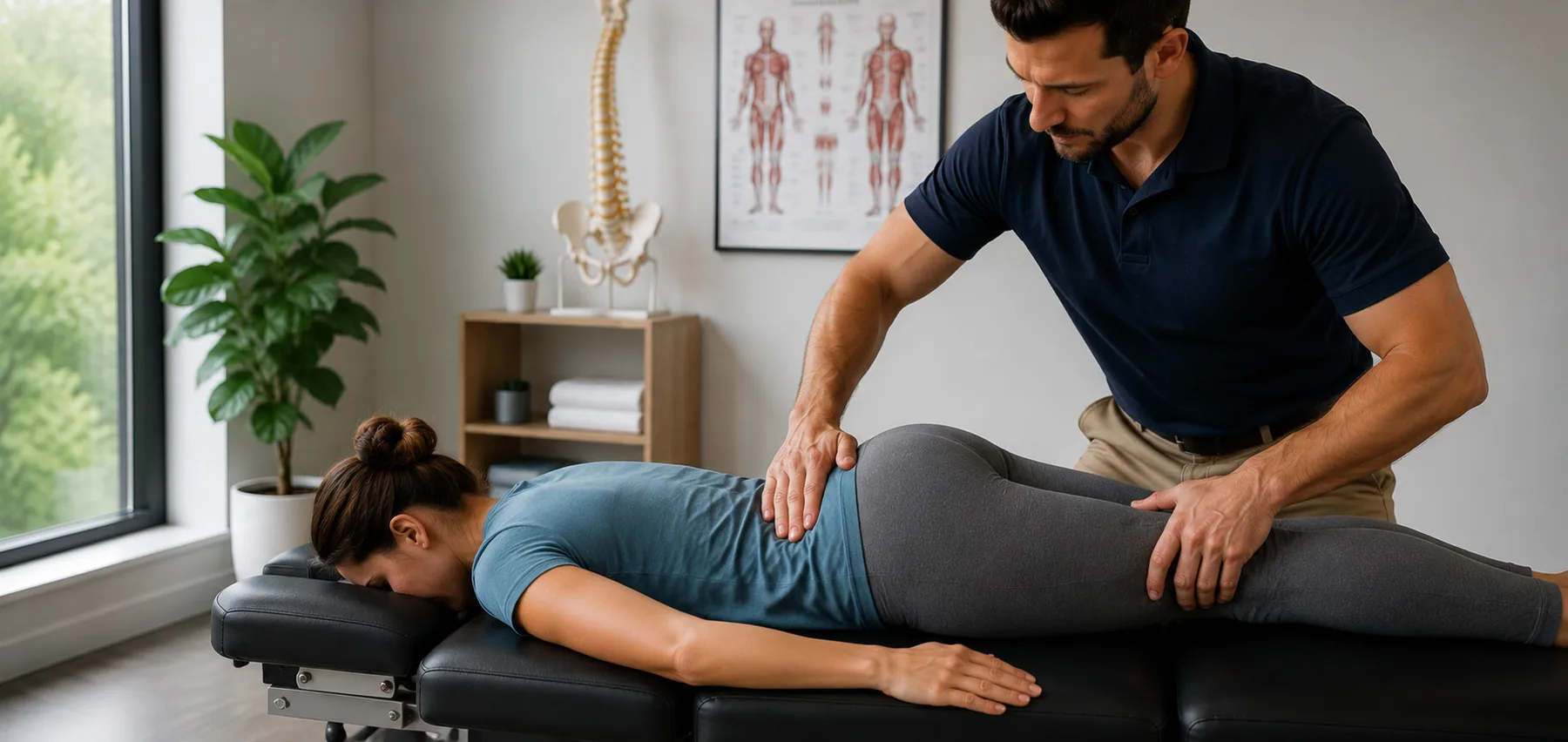
We treat back and hip pain by identifying which structure is actually generating it, then combining spinal adjustments, decompression techniques, myofascial release, corrective exercise and shockwave therapy as the findings require. The goal is to reduce pain and inflammation while improving mobility, function and quality of life.
Chiropractic Adjustments
Spinal adjustments and manipulative therapy to restore motion at the joint that lost it, which is usually the first move once the exam has located it.
Read about chiropractic adjustmentsNon-Surgical Spinal Decompression
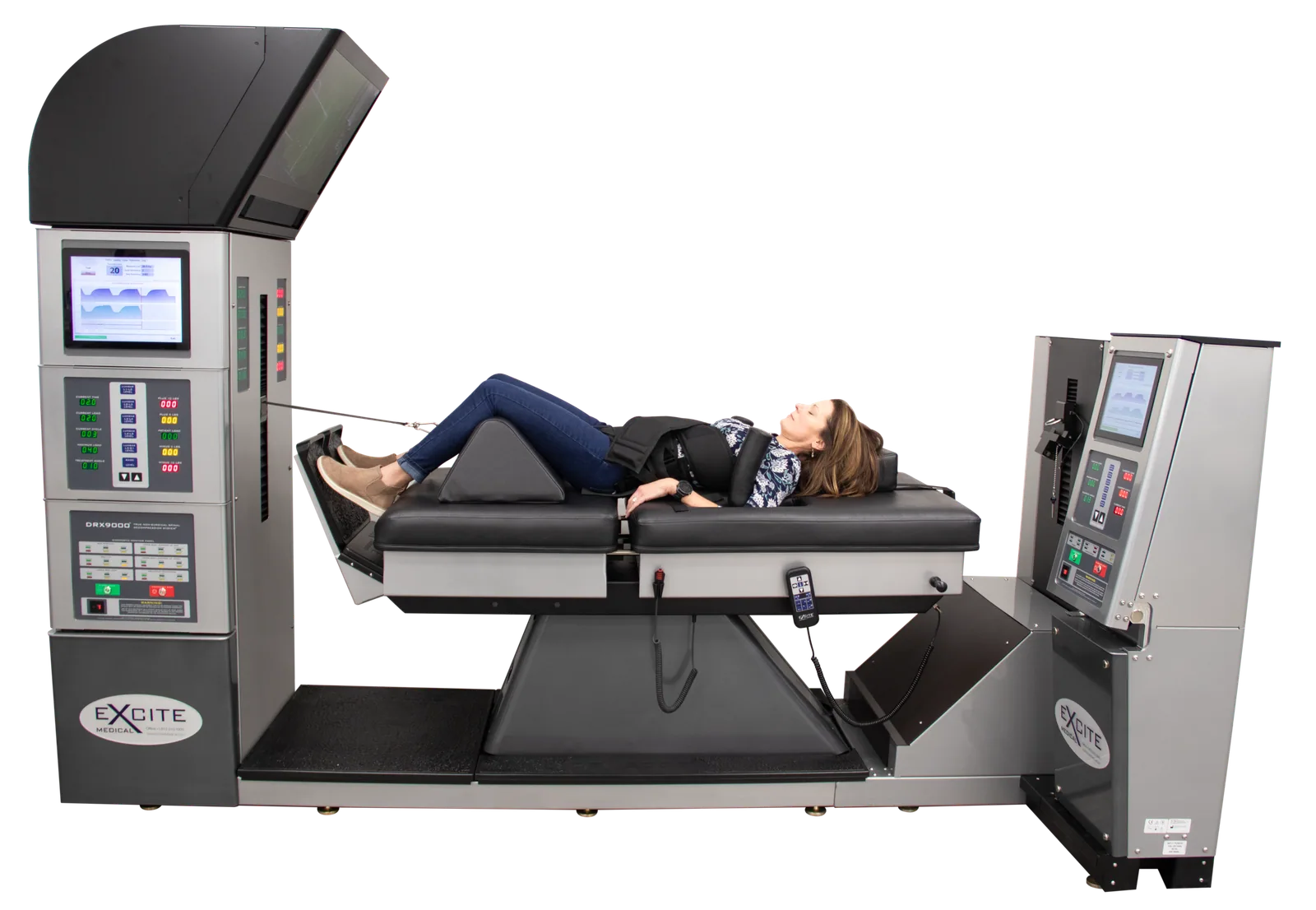
Decompression on the DRX9000 when the exam and imaging point at a disc rather than a joint or a muscle.
Read about non-surgical spinal decompressionSoft Tissue Treatments
Myofascial release and trigger point work through the glutes, hip flexors and low back, for the tissue that keeps pulling the joint back out.
Read about soft tissue treatmentsShockwave Therapy
OmniWave acoustic wave therapy for stubborn soft tissue and tendon pain around the hip that has stopped responding to hands-on work.
Read about shockwave therapyCustomized Rehab
Stretching and strengthening so the correction holds, which is the difference between a good fortnight and a lasting change.
Read about customized rehabWhole Body Red Light Therapy
Whole body sessions on the TrifectaLight PRO 450 bed, used alongside hands-on care to support recovery between visits rather than in place of it. Results vary.
Read about whole body red light therapyCustom Orthotics
Foot Levelers orthotics where a collapsed arch is tipping the pelvis and re-loading the low back from the ground up.
Read about custom orthoticsYour options, including the ones we do not offer
| Option | Best for | Worth knowing |
|---|---|---|
| Conservative chiropractic care | Most mechanical back and hip pain | Adjusting, soft tissue work and rehabilitation. The recommended first line for the majority. |
| Decompression added to the plan | Pain that radiates into the leg and points at a disc | A course of DRX9000 sessions alongside the hands-on care, not instead of it. |
| Injections | Severe inflammatory pain needing short-term control | We do not perform these. A medical provider does, and we refer when it makes sense. |
| Hip replacement or spinal surgery | Advanced joint degeneration, or a genuine failure of conservative care | Outside what we do. Surgery has a real place, and we will tell you when we think you have reached it. |
Recovery and how long it takes
Some patients notice improvement within the first few visits, while more complex issues require an ongoing treatment plan. What decides it is usually how long the pattern has been building and whether a disc or arthritic change is involved. Recent mechanical pain often responds quickly. A hip that has been stiffening for a decade will improve in function well before it stops being an arthritic hip. You get an expected timeline at your findings review rather than a number invented to sound encouraging.
Results vary. Any timeline is an expectation built from your exam, not a promise.
When it needs more than us
Book with a medical provider, or go to an emergency department, if you have any of these:
- Numbness in the groin or inner thighs, or any loss of bladder or bowel control
- Back or hip pain after a fall, a crash, or any significant trauma
- Fever, night sweats or unexplained weight loss alongside the pain
- Leg weakness that is getting worse rather than staying the same
- Severe pain that wakes you every night and is not affected by position

Patients with this problem
5.0 from 166 Google reviewsLast summer my back was in terrible shape after a day riding on a jet ski. I went to Dr. Derek and he provided some immediate relief but also introduced some critical stretch and strength techniques to help with injury prevention. 8 Months later I continue to visit once a month as continued preventative maintenance.
Who you would be seeing
By asking in-depth questions about the location, severity and nature of your pain, and testing rather than assuming, we build a clear picture of what is actually going on. Digital X-ray is on site for the cases that need it, and the treatments the findings call for are all in the same building rather than spread across three referrals.
Care for this runs through our conditions we treat, so if the exam points somewhere other than where you expected, the right treatment is already in the building.
Book the $47 evaluationWhere to find us
The clinic sits at 276 Paseo Reyes Dr in St. Augustine, Florida, just off U.S. 1 at World Golf Parkway, near the entrance to the Palencia neighborhood. Most people coming in for back and hip pain drive in from across St. Johns County, and the office is a straight run up or down U.S. 1 from either end of it.
- Palencia
- World Golf Village
- Nocatee
- Ponte Vedra
- Julington Creek
- Downtown St. Augustine
Questions we get asked
How can I tell if my pain is coming from my hip or my back?
Hip pain often shows up as groin discomfort or pain deep in the joint, while back pain typically starts above the waist and may radiate down through the buttocks, thighs, or legs. A proper evaluation is the best way to know for sure.
Do I need imaging before starting chiropractic treatment?
Not always. Imaging is usually reserved for cases where we suspect arthritis, spinal degeneration, or another issue that requires a closer look. Dr. Sisak will let you know if it is recommended after your initial evaluation.
How long does it take to feel relief from back or hip pain?
This varies based on the cause and severity of your pain. Some patients notice improvement within the first few visits, while more complex issues may require an ongoing treatment plan.
Is shockwave therapy painful?
Most patients describe shockwave therapy as producing mild discomfort or pressure rather than significant pain. Our team will walk you through what to expect before beginning treatment.
Can a chiropractor help with hip arthritis?
We cannot reverse arthritic change, and anyone telling you otherwise is overselling. What conservative care can often do is improve how the joint moves, reduce the compensations building up around it, and take load off the structures picking up the slack. That frequently changes daily function even when the joint itself has not changed.
Why does my back hurt more after sitting all day?
Sitting loads the lumbar discs more than standing does, and it lets the hip flexors shorten and the glutes switch off. That combination is one of the most common patterns we see in St. Johns County, and it responds well because the driver is behavioural as much as structural.
Request your appointment
Start with an exam,
not a guess.
Reading on this, from us
Written by the doctors here, on the same treatment this page describes.
7 Conditions Shockwave Therapy Can Help With
From heel pain to jaw tension, here are seven conditions this practice generally considers for shockwave therapy, and why the exam decides case by case.
Read the articleSeptember 3, 2026How Red Light Therapy Actually Works
Photobiomodulation is the real name for red light therapy, and the mechanism behind it centers on mitochondria. Here is the honest version of how it works.
Read the articleSeptember 3, 2026How Shockwave Therapy Helps Stubborn Pain Heal
Tendon pain that outlasts normal healing time behaves differently than a fresh strain. Here is what shockwave therapy actually does about it, and what it does not.
Read the article