
Treatment
How Shockwave Therapy Helps Stubborn Pain Heal
At a glance
Shockwave therapy delivers pulses of acoustic energy into tendon and soft tissue that has stopped healing on its own. The pulses appear to prompt a fresh biological response in tissue that has gone quiet, which loading afterward can turn into real repair. It is not a first treatment and not a guarantee. It is generally reached for after months of pain and a plateau in hands-on care, and results vary by case.
Most soft tissue injuries heal on a predictable curve. Something gets overloaded, the area becomes inflamed, the body repairs it, and within a matter of weeks the tissue tolerates work again. Tendon and soft tissue pain that is still there months later has usually come off that curve. It is not acutely inflamed anymore, but it never finished remodeling either, and it sits in a low-grade, irritated state that rest alone does not seem to fix. Shockwave therapy is the tool this practice reaches for in that specific situation.
How the treatment actually works
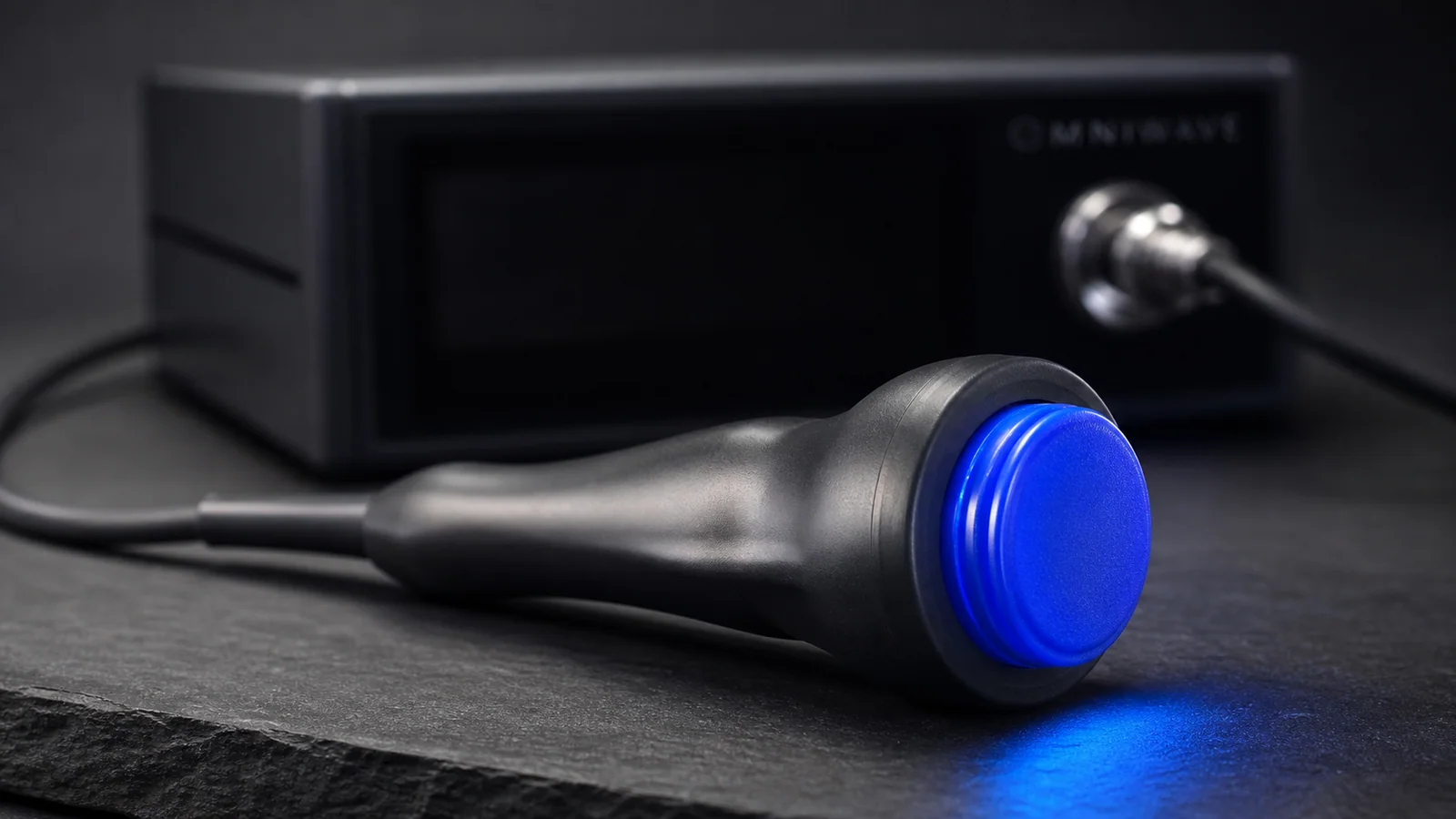
Shockwave therapy delivers rapid pulses of acoustic energy into a targeted area of tendon or soft tissue, through a handpiece pressed against the skin over conductive gel. The sensation is usually described as tapping or building pressure rather than pain, and the intensity is adjustable.
What the pulses appear to do is prompt a fresh biological response in tissue that has gone quiet. A review of how extracorporeal shockwaves affect musculoskeletal tissue at the cellular level describes the effect as largely mechanical energy converted into a biochemical signal, a process researchers call mechanotransduction, which is believed to influence local blood flow and cell activity in the treated area. That is a mechanism, not a promise. It explains why loading the tissue afterward matters, because the signal has to be followed by activity for it to turn into anything durable.
Why some tissue stops healing on its own
AAOS’s patient guide to how soft-tissue injuries normally heal walks through the normal progression from acute injury to repair, which is useful context for understanding why some cases fall outside it. A tendon that has been painful for four months has, in a sense, gotten stuck partway through that process.
NIAMS’s explanation of how a tendon injury develops and why some don’t resolve covers the same territory from the diagnosis side: repetitive strain wears down a tendon faster than it can repair itself, and once that imbalance sets in, more rest does not always tip it back. That is the population shockwave is built for, and it is also why the exam matters more than the device. A joint that has simply stopped moving well is a different problem, and it is one of several pain-relief treatments this practice offers beyond shockwave alone, not something an acoustic wave applicator is built to fix.
Shockwave is not a first move. It is the step after hands-on care has plateaued, for tissue that the exam confirms is tendon or soft tissue in origin.
Who tends to respond, and who does not
The cases that respond best share a pattern: a specific, tender spot rather than a general ache, pain that has lasted months rather than weeks, and a history of hands-on care that helped initially and then stopped making a difference. People training the same tissue repeatedly, drivers of a car accident who went back to work too soon, and anyone whose shoulder or hip has been “almost better” for half a year fit that description often.
It is a poor fit for an acute tear that needs imaging first, for pain that travels down an arm or leg along a nerve path, and for anyone with a bleeding disorder, an active infection in the area, or who is pregnant. A fuller look at the shockwave service, including who it is and is not appropriate for covers those exclusions in more detail.
What it does not do
Shockwave therapy does not replace an exam, and it is not a substitute for imaging when imaging is what the situation calls for. It is not a guaranteed fix, and nobody who has been in pain for years should expect the same timeline as someone whose pain started three months ago.
It also does not stand in for the loading and corrective exercise that follows a session. Provoking a response in the tissue is only the first half of the process. What a patient does with that window, in terms of movement and gradual loading, is what tends to separate a lasting improvement from a treatment that fades after a few weeks. Nobody should walk away from a session and assume the work is finished.
APTA’s magazine feature on shockwave therapy in physical therapy practice is a useful, balanced read on where the treatment fits into a broader plan of care rather than standing in for one. It is one tool among several, used when the exam says it is the right one, and results vary by patient.
Questions we get asked
Is shockwave therapy the same as a cortisone shot?
No. A cortisone injection reduces inflammation directly and works quickly, but it does not repair tissue and its effect on tendons specifically can be short-lived. Shockwave does not inject anything. It aims to trigger a biological repair response in tissue that has stopped healing, which is a different mechanism with a slower, cumulative timeline.
Does shockwave therapy actually regenerate tendon tissue?
The honest answer is that it appears to prompt a healing response rather than regenerate tissue outright. Research describes changes in blood flow and cellular signaling after treatment, not tissue being rebuilt from nothing. Results vary, and no one here will promise a specific outcome before examining you.
How long before pain that has lasted months usually improves?
There is no fixed timeline, because the tissue involved and how long it has been irritated both matter. Some people notice change within a couple of weeks of starting a course. Others take longer. The exam is what gives you a realistic estimate for your specific case, not a general average.
Can shockwave therapy replace an adjustment?
No, and it is not meant to. An adjustment restores motion to a joint that has stopped moving well. Shockwave targets tendon and soft tissue that has stopped healing. Most people who need both get them in the same visit, because they are solving different parts of the same problem.
Is shockwave therapy right for a fresh injury?
Usually not. Most fresh strains and sprains are still on a normal healing curve and respond to rest, loading and time. Shockwave is generally reached for once that curve has stalled, typically after a few months, which is also why an exam comes before any device is used.