
Patient Education
Red Light Therapy and Skin: What the Research Shows
At a glance
Red and near-infrared light are studied for their effect on skin cells, particularly fibroblasts, the cells that produce collagen and elastin. Some research links light exposure to changes associated with firmer, more even-looking skin over a series of sessions. This is not a dermatology or cosmetic practice, and skin is never the reason to start care here. If skin changes happen alongside sessions used for another purpose, that is a secondary observation, not a promised outcome, and results vary widely.
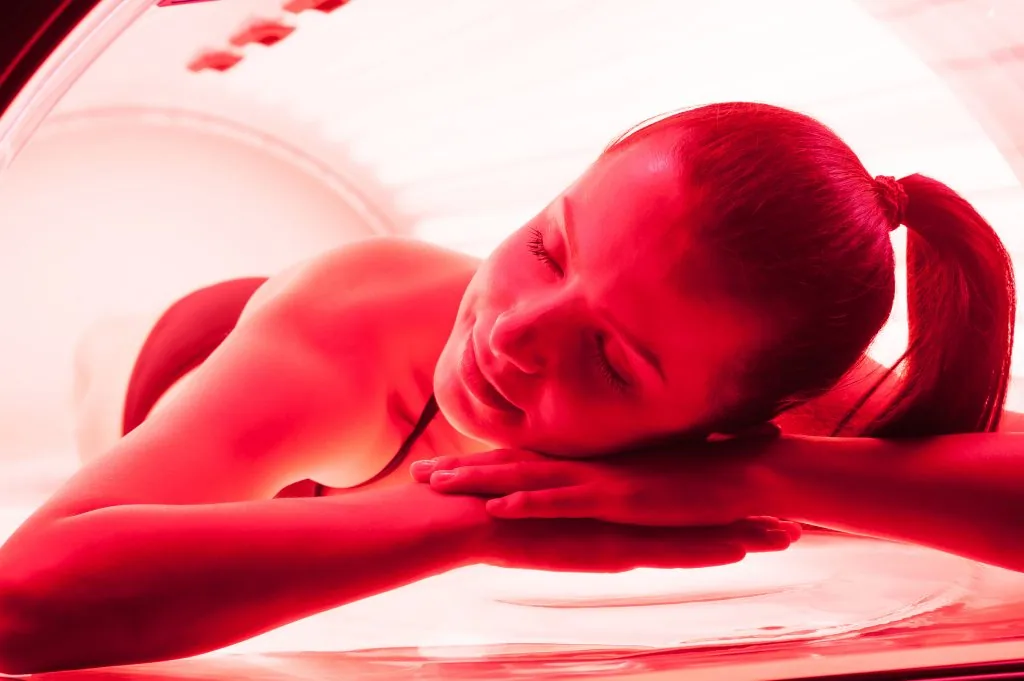
This is not a skincare page from a cosmetic clinic, and it is worth saying that plainly before getting into the research. This is a chiropractic and rehabilitation practice, and if skin health is your main goal, we would rather point you toward a dermatologist than pretend a red light bed built for recovery is the right tool for that job. With that said, patients ask about skin often enough that the honest research deserves a straight answer.
It usually comes up as a passing question during a recovery-focused visit, not as the reason someone books an appointment here, and that context matters for how we answer it. What follows is the same research a dermatology-focused provider might reference, described plainly, without stretching it into a promise about your particular skin.
What the research actually studies
The skin-related research on red and near-infrared light centers on fibroblasts, the cells in the dermis responsible for producing collagen and elastin, the proteins that give skin its structure and elasticity. A wide-ranging review of how different light wavelengths affect the skin describes red light in the roughly 600 to 700 nanometer range as capable of reaching the dermis and stimulating fibroblast activity, with some studies reporting measurable increases in collagen-related gene expression after a series of sessions.
That is a real, cited mechanism. It is not the same as a guaranteed cosmetic result for any individual.
What “results vary” means here specifically
A study on red light’s effect on visible signs of skin aging found associations between light exposure protocols and improvements in measures like skin texture and fine lines in the study population reviewed. Studies in this space differ widely in wavelength, session length, number of sessions and how outcomes were measured, which is exactly why we will not quote you a number of sessions or a specific expected change. What one study measured is not a promise about what you, individually, will see.
Fibroblasts responding to light is a real, studied mechanism. What that adds up to for your specific skin is not something any single study, or any clinic, can promise you in advance.
Why session protocols vary so much between studies
One reason we avoid quoting a number of sessions for a skin-related question is that the studies themselves are not standardized. Wavelength, session length, distance from the light source, and total number of sessions all differ from one piece of research to the next, and study populations differ too. Two studies that both claim a benefit for “collagen production” may have used meaningfully different protocols to get there, which makes translating either result into a specific promise for one person’s skin an overreach we are not willing to make.
That is also why a dermatologist evaluating a specific skin concern, such as acne, scarring or a change that looks abnormal, is doing something this practice is not set up to do: examining the skin itself as the primary focus, with training and diagnostic tools built for exactly that purpose. A whole body bed built for musculoskeletal recovery is not a substitute for that kind of exam.
Why this is not the setting for a cosmetic goal
A review noting dermatology among the fields exploring photobiomodulation lists skin-related applications as one of several areas the same underlying light mechanism has been studied for, alongside wound healing and musculoskeletal recovery. That breadth is part of why we do not treat “skin” as a separate service line here. The equipment and protocol are built around recovery and rehabilitation, not optimized or measured for cosmetic outcomes, and we do not have the training or scope to evaluate a skin condition the way a dermatologist would.
Where this actually fits
If you are already coming in for a session on the whole body red light bed for recovery or soreness, and you happen to notice a change in your skin along the way, that is a reasonable secondary observation to mention. It is not why the sessions exist, and it should not be why you start them. The rehabilitation care this equipment actually supports is recovery, stiffness and post-injury healing, and that is the honest frame to evaluate it against.
Questions we get asked
Is this practice offering red light therapy as a skincare treatment?
No. This is a chiropractic and rehabilitation practice, and red light sessions here are built around recovery, soreness and general wellness rather than a cosmetic outcome. Any skin-related interest is a secondary question we will answer honestly, not something we are set up to promise or measure.
Does red light therapy really affect collagen production?
Research on skin cells has linked certain red and near-infrared wavelengths to increased fibroblast activity, the cells that produce collagen and elastin. This is a genuine area of study, though the strength and consistency of results vary across the research, and individual skin responses vary as well.
How many sessions would it take to notice a skin difference?
There is no reliable number we can give you, because skin response varies significantly by person and the research itself uses a wide range of protocols. If skin appearance is your main goal, we would rather be upfront that this is not the setting built to optimize for it.
Can red light therapy help with acne or scarring?
These are commonly asked questions, and there is some research interest in light's effect on skin inflammation and healing generally. We are not a dermatology practice, and anyone with a specific skin condition like acne or scarring is better served starting with a dermatologist who can evaluate it directly.
Is red light therapy here the same as what a medical spa offers for skin?
The underlying light mechanism is similar, but the setting and goals are different. A medical spa is typically built around cosmetic outcomes and may use different protocols. Here, the equipment is used primarily for recovery and rehabilitation, with any skin interest treated as a secondary, honestly-hedged conversation.