
Patient Education
Red Light Therapy, Sleep and Energy: What the Research Says
At a glance
Fatigue, brain fog and poor sleep are common complaints, and patients ask whether red light therapy helps. The honest answer: this is the least settled area of the research. Light is well established as a driver of circadian rhythm and melatonin timing, but that research is mostly about broader light exposure, not a red light therapy session specifically. Some patients report feeling more relaxed afterward. Results vary considerably, and this is not presented as a treatment for a sleep disorder.
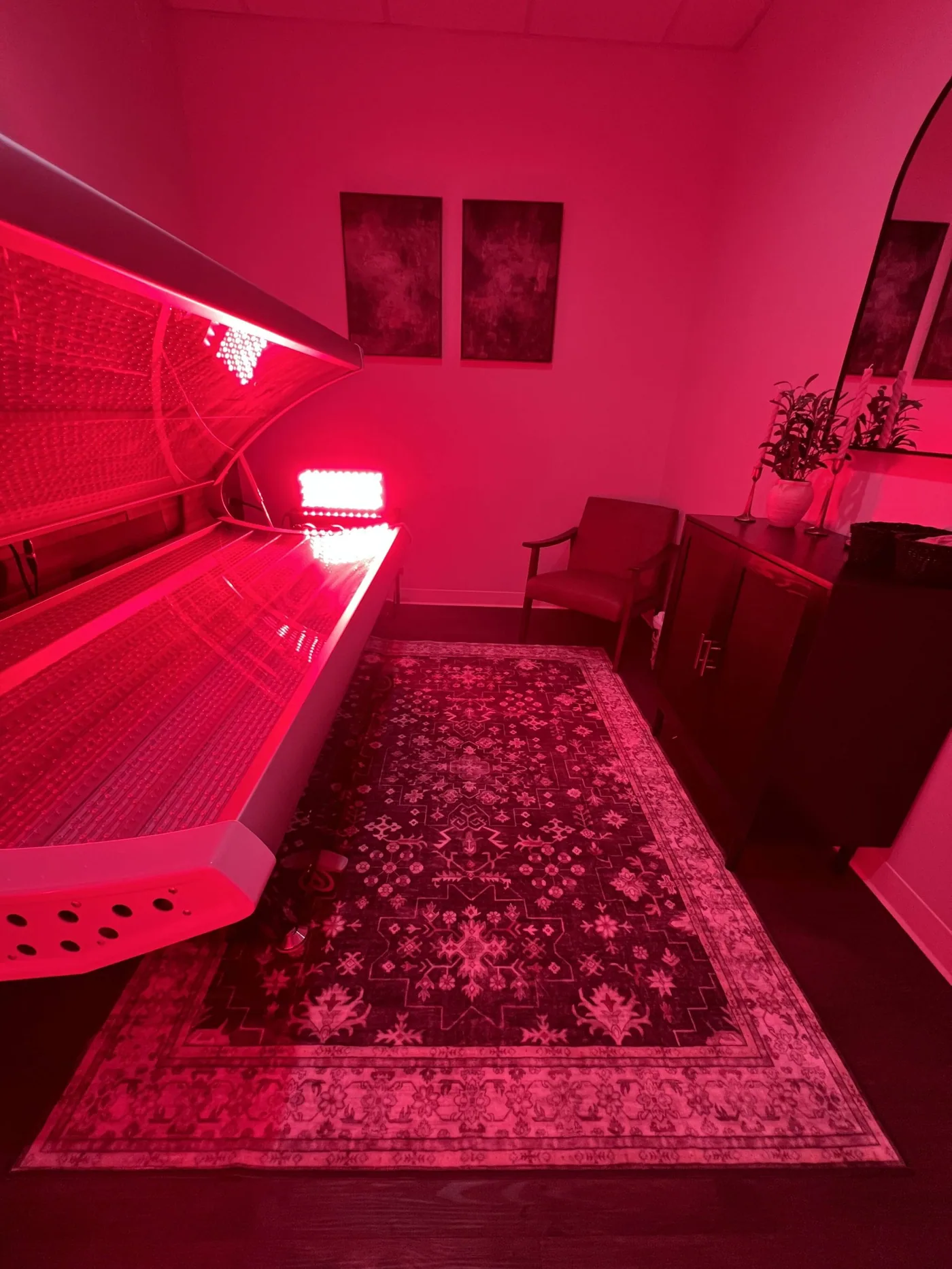
This is the area where we are most careful with our own language, because it is the one with the least direct evidence behind it. Fatigue, brain fog and disrupted sleep come up often enough in conversation that it is worth addressing honestly, rather than either dismissing the question or overselling an answer.
Part of the difficulty is that fatigue and poor sleep have dozens of possible causes, from stress to medication side effects to an underlying medical condition, and a short light session cannot meaningfully sort between them. What we can do is describe accurately what the research actually covers, and be clear about the parts of it that do not yet extend to a claim about red light therapy specifically.
What is actually well established
Light’s effect on the body’s internal clock is genuinely well documented. A peer-reviewed look at how light and melatonin interact to set the body’s clock describes how the timing, intensity and spectrum of light exposure shape when the body produces melatonin, the hormone tied to feeling sleepy. Bright light exposure at the wrong time of day can shift that timing in ways that make sleep harder, and at the right time can help realign a disrupted schedule.
A review of how light exposure timing shifts the body’s circadian clock adds detail on the specific patterns: the effect depends heavily on when the exposure happens relative to a person’s existing rhythm, not just on the fact of exposure itself. This is real, well-studied science.
Where the evidence gets thinner
What this research is mostly studying is broader daily light exposure and its timing, not a short session on a red light therapy bed specifically. A 10 to 20 minute session, at whatever time of day it happens to be scheduled, is a different exposure than the studies above are generally describing. We are not aware of strong, direct evidence that a red light therapy session meaningfully shifts melatonin or fixes a sleep problem the way targeted light-timing interventions can.
That gap matters, and we would rather name it plainly than skip past it or let a hopeful patient fill it in with more certainty than the evidence actually supports.
Light and the body’s clock are genuinely connected. Whether a short red light session moves that needle in a meaningful way is a much more open question, and we are not going to pretend otherwise.
What patients actually report
Some patients describe feeling calmer, more rested, or generally better after a session. That is worth taking seriously as a reported experience. It is also reasonable to note that ten to twenty minutes lying still in a warm, quiet room can be relaxing on its own, independent of any light-specific mechanism, and we cannot separate the two from a single anecdote.
A reasonable way to think about trying it
If fatigue or low energy is a passing complaint alongside something we are already treating you for, adding a session is low-risk and some people find it a pleasant part of their visit. If sleep, fatigue or brain fog is the primary problem you came in to solve, we would rather point you toward a proper evaluation of that specific issue than let a red light session stand in for one. That is not a hedge to avoid selling you something. It is the more useful answer for someone actually trying to fix a sleep problem.
Age-related sleep changes, and where this fits
Sleep changes are common with age for reasons that have nothing to do with light exposure. The National Institute on Aging’s guidance on sleep changes with age covers the range of normal, expected shifts, along with signs that suggest a real sleep disorder worth evaluating rather than managing informally.
If sleep or energy is your primary concern, that evaluation is the right first step, not a red light session. Where red light therapy fits more honestly is as one small piece within the broader rehabilitation and recovery care offered here, alongside a red light session on the whole body bed for people already being seen for something else who are curious whether it helps. Results vary, and we would rather undersell this one than oversell it.
Questions we get asked
Can red light therapy fix insomnia?
No, and we would not present it that way. Insomnia and other sleep disorders have specific causes and usually need targeted evaluation, sometimes from a sleep specialist. A red light session is not a substitute for that evaluation, though some patients report feeling more relaxed afterward.
Does red light therapy affect melatonin?
The research connecting light and melatonin is well established for light exposure generally, particularly around timing and intensity. Whether a short red light therapy session meaningfully shifts melatonin the way daytime light exposure does is a much less settled question, and we are not going to overstate it.
Why do some patients say they sleep better after sessions?
Some patients report feeling calmer or more rested after a session, which could relate to relaxation during a quiet, warm 10 to 20 minutes as much as to any specific mechanism. We take that feedback seriously without claiming it as proven, and results vary widely.
Is brain fog a symptom red light therapy is proven to treat?
No. Brain fog has many possible causes, from sleep quality to stress to other health conditions, and it deserves its own evaluation rather than being treated as a red light indication. We would rather tell you that plainly than let a session substitute for finding an actual cause.
Should I expect more energy right after a session?
Some people describe feeling more alert or relaxed after a session, similar to how a short walk outside can shift how you feel. That is a reported experience, not a documented physiological energy boost specific to red light therapy, and it is not something we will promise you.