
Patient Education
What to Expect at Your First Shockwave Session
At a glance
A shockwave session starts with an exam, not the device, because not every tendon or soft tissue problem is a good fit. Once cleared, gel and a handpiece deliver rapid pulses that feel like tapping or pressure over a short session. There is no downtime, though mild soreness for a day or two is normal. Most people need a course of sessions spaced over a few weeks, and the exact number depends on what the exam finds.
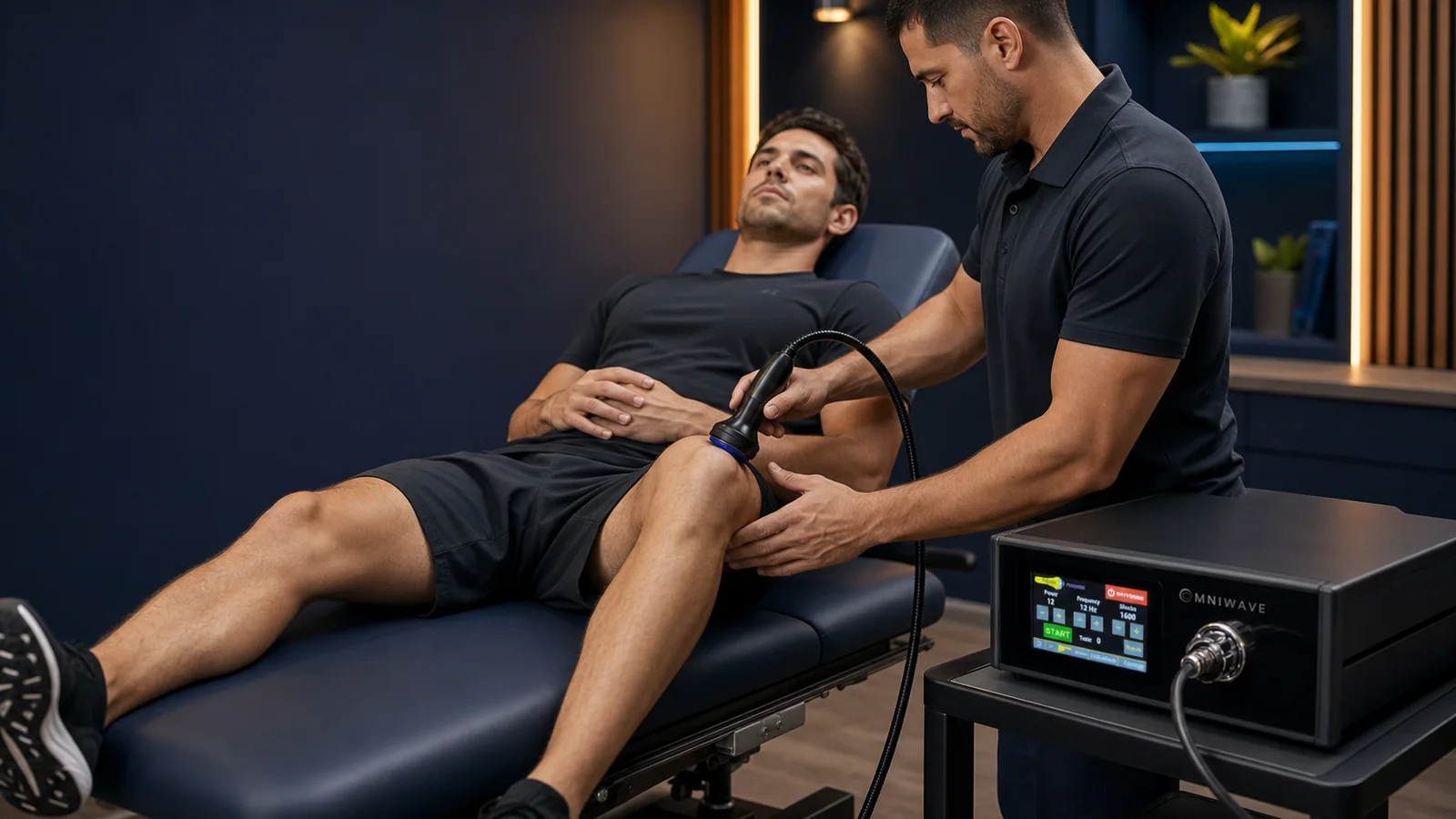
Booking a shockwave session is not the first step. The exam is, and skipping it would mean guessing whether the pain in front of us is even the kind of problem shockwave addresses. What follows is what that first visit generally looks like once the exam has confirmed it is a reasonable fit.
The exam comes before the device
A full consultation happens first: a history of the pain, what has already been tried, and orthopedic and neurological testing to narrow down what is actually generating the symptoms. That step exists because tendon pain, a joint that has stopped moving, and a disc irritating a nerve can all show up as “pain in the same general area,” and they call for different treatments entirely.
AAOS’s example of a structured loading program after tendon treatment gives a sense of what typically follows once a tendon diagnosis is confirmed: staged exercise built around the treatment, not treatment as a standalone event. The exam is what determines whether you are a candidate for that kind of plan in the first place, which is also covered on the shockwave therapy service page in more detail.
What the session itself involves
Once cleared, the process is simple. Conductive gel goes on the skin over the specific tender spot, and a handpiece delivers rapid pulses through it. Most people describe the sensation as tapping or a building pressure rather than sharp pain, and it tends to feel more intense directly over an inflamed or scarred area. The intensity is adjustable, and Nate Reinhardt, who runs the shockwave and decompression sessions here, will talk through what to expect before starting.
The treatment itself is typically a short session. There is no sedation, no needle, and nothing to recover from in the way surgery would require.
The area treated is specific, not a broad region. NIAMS’s patient guide to diagnosing tendon injuries describes how a tendon problem can usually be traced to a defined, irritated segment rather than a general ache spread across a joint, which is part of why the exam matters: it is what tells us exactly where the applicator needs to go, rather than treating the whole area on a guess.
Why soreness afterward is expected, not a setback
Some soreness or warmth in the treated area for a day or two afterward is common, and it is generally a sign the tissue responded rather than a problem. The physiology behind why shockwave soreness settles within a couple of days comes down to the same mechanical-to- biochemical signal that makes the treatment work in the first place: a short window of local irritation ahead of a repair response. Improvement itself can show up quickly for some people and take longer for others.
No downtime is part of the design. You are meant to walk out and keep living your life, not schedule around recovery.
Why one visit is rarely the whole plan
A single pulse of acoustic energy rarely undoes months of stalled healing. A course of sessions, often spaced over a few weeks, is more typical, because it gives the tissue repeated chances to respond and gives you time to load it correctly between visits. The exact number of sessions is not something we quote before the exam, because it depends on what tissue is involved and how long it has been irritated.
Between sessions, the corrective exercise or loading you are given matters as much as the treatment itself. Shockwave provokes a response in the tissue; what you do with that window is what turns it into a tendon that tolerates work again, rather than one that goes quiet for a few days and returns to the same baseline. That loading piece is part of why shockwave sits inside a broader care plan built around pain relief rather than a single device, not as an isolated purchase.
New patients typically start with the $47 evaluation, which covers the exam itself along with a trial shockwave or red light session where it is clinically appropriate. That means you can generally get a sense of the sensation and the process before committing to a full course, and the number of sessions recommended and their cost are laid out at the findings review, before anything past the trial visit begins.
Questions we get asked
Do I need an exam before shockwave, or can I book it directly?
An exam comes first. New patients start with the $47 evaluation, which includes orthopedic and neurological testing, digital imaging where it is clinically needed, and a trial shockwave or red light session where appropriate. That exam is what confirms shockwave is actually the right tool for your specific pain.
What does the shockwave sensation actually feel like?
Most people describe a rapid tapping or vibration, with more pressure over inflamed or scarred spots. It is generally described as uncomfortable rather than painful, and the intensity is adjustable in the moment. Nate Reinhardt, who runs the sessions, will explain what you should feel before starting.
Is soreness after a session something to worry about?
Mild soreness or a warm feeling in the area for a day or two afterward is a normal response, similar to how a muscle feels after a hard workout. It is not a sign anything went wrong. If discomfort feels severe or unusual, that is worth mentioning at your next visit.
Why does shockwave take multiple sessions instead of one?
Tissue that has been irritated for months does not typically respond fully to a single pulse of energy. A course of sessions, often spaced over a few weeks, gives the tissue repeated opportunities to respond and gives you time to load it properly between visits. The exact number depends on the exam.
Can I go back to normal activity right after a session?
Yes. There is no downtime built into a shockwave session, and most people go straight back to their day. What changes afterward is often a short period of corrective loading or exercise, which is part of turning the treatment into lasting improvement rather than a one-time event.